The Benefits of Early Years Construction Sets
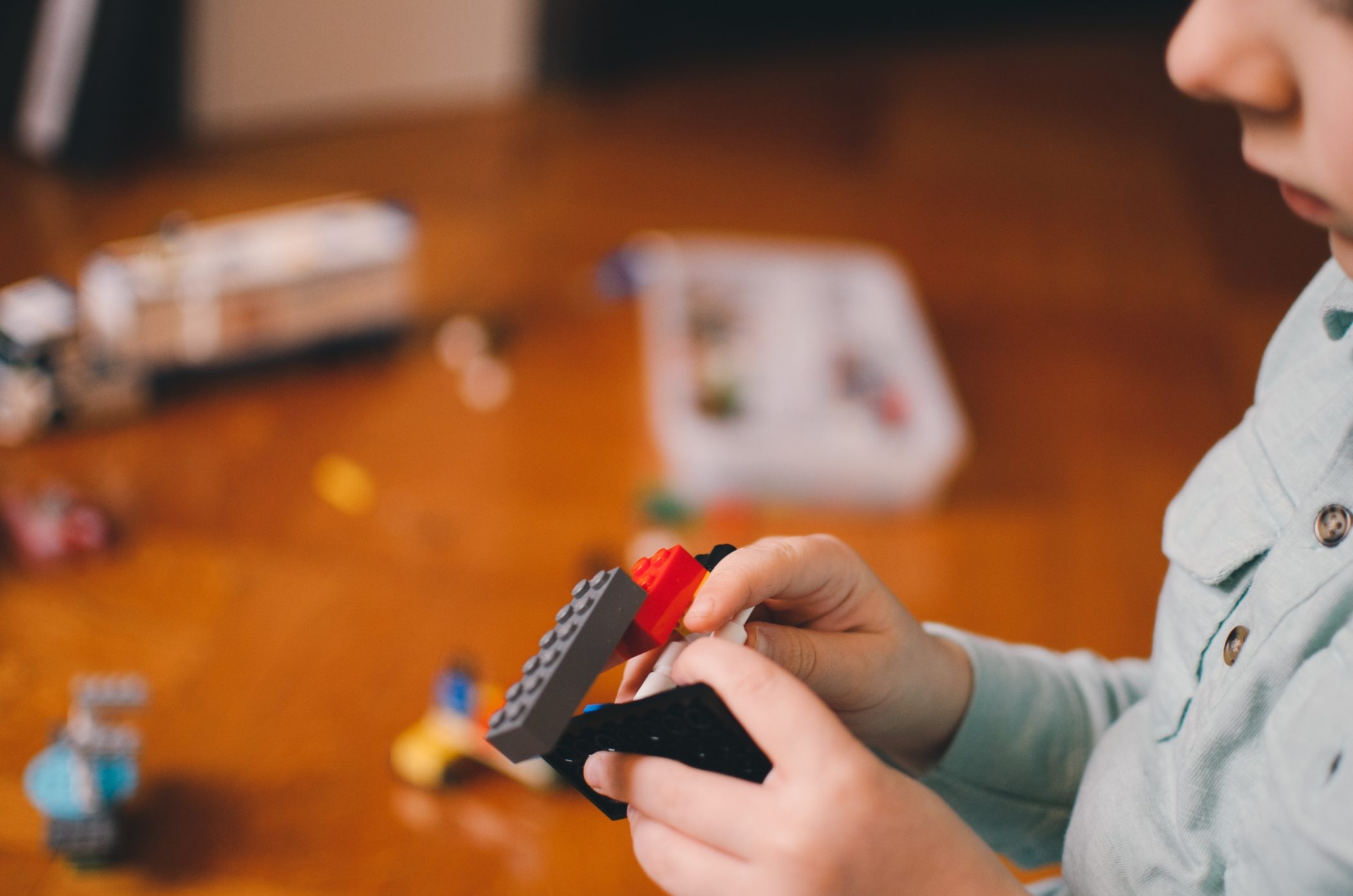
Having been enjoyed by generations of children since they were first introduced, early years construction sets remain a popular option for play time. However, they’re not only an incredibly popular toy, but they also have a number of developmental benefits. It’s these different benefits that have lead to construction sets and similar toys like building blocks remaining popular despite increasing competition from digital toys and activities for children of all ages.
Let’s delve into what some of these particular benefits are, as there are plenty to choose from. In this article, we’ll look at both social and developmental skills that young children can learn by playing with construction sets.
Motor Skills and Coordination
Constructive play – the activity of playing with construction sets – is vital for improving and strengthening the fine motor skills that children will need when they begin learning how to write. By playing with construction sets that require children to use their fingers and hands, they improve their grip and dexterity, which lay the foundations for more complex skills like controlling a pencil to produce legible writing.
Playing with construction sets has also been shown to improve spatial skills in young learners. Multiple studies have reported the correlation between children who are interested in construction and creating structures, and those children who tend to perform better on spatial ability tests. This is because constructive play involves the use of spatial skills like the rotation, positioning, and movement of pieces – all of which are further developing over time when playing with construction sets.
Problem Solving Skills
Because construction sets facilitate open-ended play where children can build whatever they choose, they promote the development of thinking skills and problem-solving skills. Construction sets also promote divergent thinking which is the process of exploring many different solutions, unlike some other forms of play where there is clearly only one correct outcome – such as a picture puzzle.
Through continued play with construction sets, young children learn how to solve different problems through trial and error by improving the things they build.
Language Development
Perhaps surprisingly so for such a physical activity, constructive play also boost language development in young children. While playing with building blocks and other types of construction toys, children expand their vocabulary as they begin to describe what they are building in terms of size, shape, and colour.
Cognitive Flexibility
Cognitive flexibility refers to the ability to shift your focus between two different concepts or stimuli. This is a skill that young learners must master in order to excel in an educational environment. As children are easily distracted, improving their cognitive flexibility through play goes a long way in preparing them for school.
Cooperative Play
Of course, construction sets are not just for individual play, they are also useful for facilitating cooperative play between multiple children. As an added bonus, construction toys are gender-neutral so they can be used by all children as a basis for social interaction and cooperative play.
Cooperative play teaches children to see beyond winning and losing in situations and encourages them to recognise the value of working together to achieve a common goal. It also fosters the development of vital social skills and learning how to interact with others – something which will help to settle them into classroom life.
Preparation for Education
Last but certainly not least, constructive play also prepares children for education, laying the foundation for scientific and mathematical concepts they will learn in the classroom.
These include concepts like mechanics, balance, names of different geometric shapes, counting, and recognition of the differences between length and width.
** This is a guest post **