Maternal Mental Health Matters Awareness Week: Living with Post Traumatic Stress Disorder
This week is Maternal Mental Health Matters Awareness Week and whilst it has been great to see so many issues raised and talks of depression and anxiety addressed so publicly, one topic I have seen far less of, both this week and in general, is Post Traumatic Stress Disorder (PTSD). Whilst PTSD following a traumatic birth is more widely recognised, PTSD following miscarriage and stillbirth is still being overlooked despite being far more common that you’d think. Earlier this week I spoke with a much loved friend and a fellow bereaved Mother about our experiences of PTSD and we both agreed that, for the most part, not only did it take far too long to receive a diagnosis but that support for PTSD after losing a baby was minimal.
Whilst recent studies have shown that 1 in 4 women suffer with mental health issues during pregnancy, those who have lost a baby are far more likely to experience long-term post traumatic stress disorder, anxiety and depression, and yet many are simply discharged with no follow up appointments or post-natal support. Even after losing Joseph it took six years before I was diagnosed with PTSD and a further two years before I was finally offered treatment for a condition which had already massively impacted on my life in so many ways. The fact is, support should be more easily accessible to ALL Mother’s, whether they hold their baby in their arms or their hearts.
 For those who aren’t familiar with PTSD it is a condition that people may develop after experiencing or witnessing a traumatic event or serious injury. I am sure many of us are familiar with soldiers returning from the war with PTSD, having seen and experienced such unspeakable horrors, and yet I wonder how many people reading this would associate that same condition with the loss of a baby?
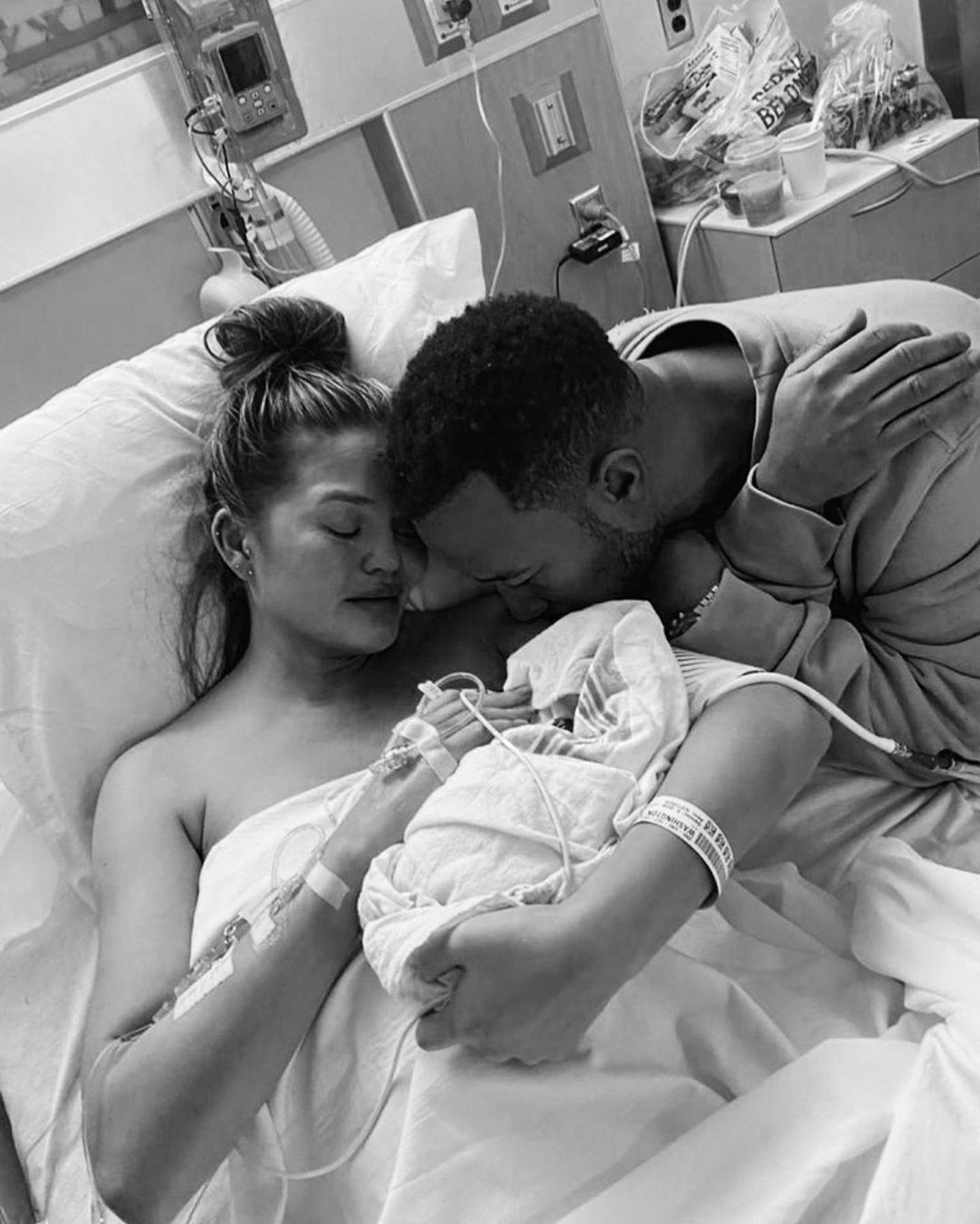
The irony isn’t lost on me that had my birth with Joseph been physically traumatic, had I needed emergency surgery, lost too much blood or endured physical complications, I may have received a diagnosis of PTSD far earlier than I did. Whilst my birth may have been categorised as “normal” on paper, what the doctors didn’t account for is that at twenty six years old I had to undergo the shock of learning that my baby had died, endure a thirty six hour induction, give birth to a child we would never take home as planned, and stand at his graveside just eight days later. And if that isn’t a trauma then I don’t know what is.
In those early days when the sight of a pregnant lady would leave me sobbing, when the sound of a newborn baby crying would bring me to my knees, I was told by others that it was simply the nature of grief. When hearing the name “Joseph” called out in public places would leave me gasping for breath, when I flicked on ‘One Born Every Minute’ and cried until I was physically sick, I was told that it was completely normal and would get easier in time. And yet surely there comes a point where grief is no longer a blanket term for anxiety, insomnia, depression and panic attacks; surely there reaches a point where we are being failed by medical professionals to be told that this is all simply part and parcel of the grieving process?
 Getting pregnant again was a huge turning point for me and, following a succession of miscarriages, when my pregnancy with Eva began to progress, my mental health soon spiralled out of control. Not only did I have the huge anxiety of losing another pregnancy having already been through so much, but I had to visit the same clinics, answer the same questions, see the same doctors and nurses who brought back every single moment of our heartache six years prior. At what should have been such a happy time for our family, and indeed for Gaz having his first child, it was in fact one of the toughest times of my life, absolutely convinced that my baby would die and surrounded by reminders why my fears were founded.
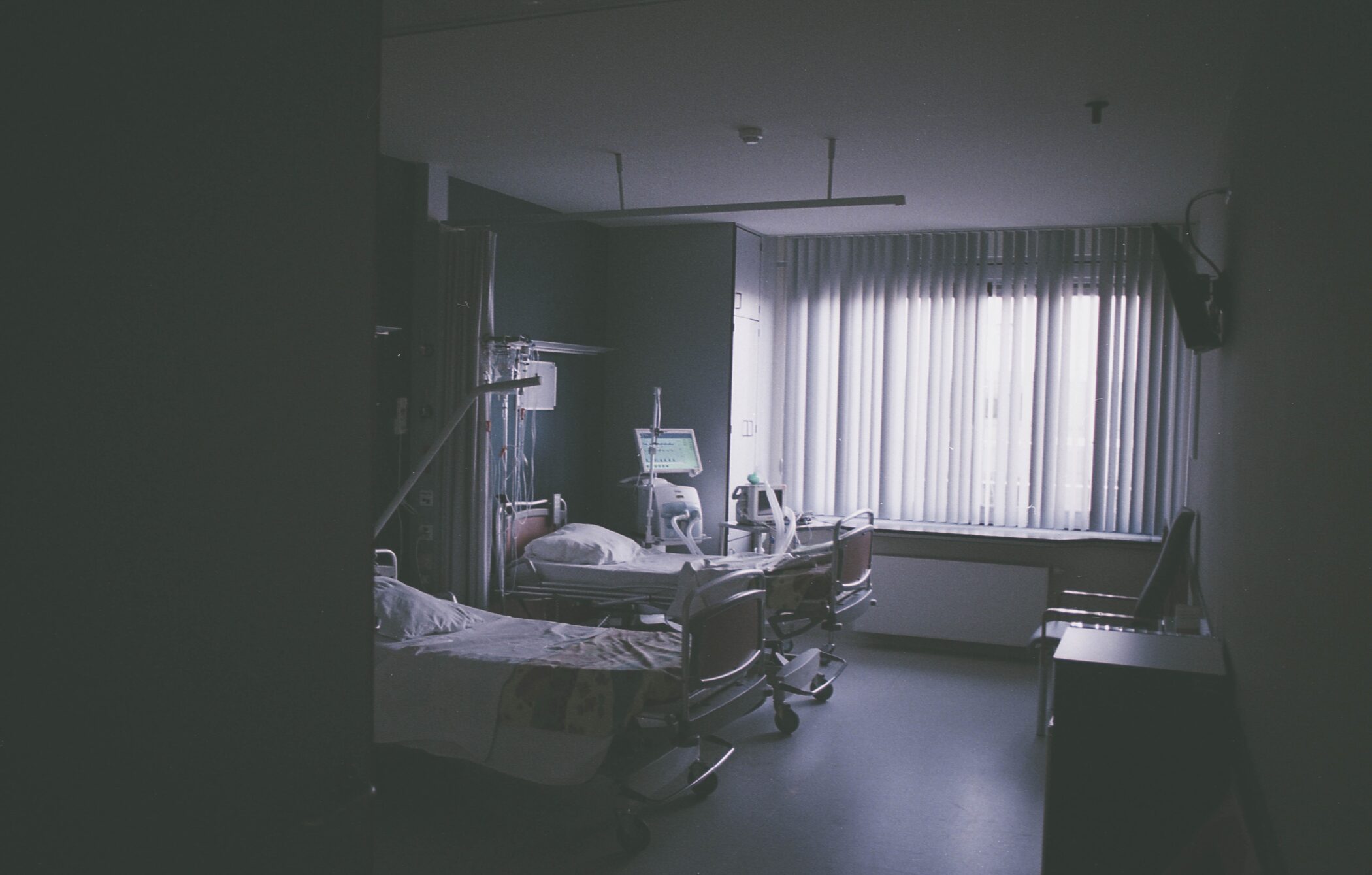
On the day that I was induced with Eva I was taken to the only remaining room on delivery to discover, by a cruel twist of fate, it was the exact same room I had given birth to Joseph in. Lying there on the bed looking at the same chipped paint in the corner of the ceiling, the same computer collecting dust on the side, the same window looking out onto the rooftops below, I was somehow expected to find the strength to give birth to our daughter. Through every agonising moment of labour, when the overwhelming sounds and smells and the constant buzz of machines transported me back to the day our whole world turned upside down, I was supposed to experience one of the happiest moments of my life.
I’m sure for anyone that would have been too much to bear and I felt incredibly cheated that at an already difficult time in my life I had finally welcomed our long awaited daughter into the world surrounded by so many heartbreaking memories, clouding every single moment of the healthy baby in front of us. Later, as I lay with her in my arms on maternity, the door to the bereavement suite directly in my line of vision, as much as I wanted to look away and focus on the baby right in front of me, I couldn’t take my eyes from the place where we had spent our final moments together with Joseph. I couldn’t help but hear the opening and closing of the fridge in the corridor where I had taken juice in the morning, the gentle murmurs of midwives as they consoled another family through their devastating loss, the telephone ringing at the desk where a registrar had handed us a death certificate and sent us on our way.
 So it was no surprise in the weeks and months that followed I experienced severe PND, finding myself struggling to accept that Eva was here and safe and would not be taken from me. The warmth of her body simply reminded me of the fact that Joseph had grown cold, the sound of her cries took me back to the silence and the fact that Joseph did not, the way her cheeks filled out as she sized up in clothes simply acted as a reminder that Joseph had never got the chance to grow. I experienced horrific flashbacks completely out of nowhere, lay awake at night consumed by panic and a feeling of dread, made excuses not to meet friends or even leave the house, terrified that the slightest thing would trigger those feelings of panic and unravel the progress I had made in the six years since Joseph had been gone.
I can still remember the point where a GP filling in at our surgery had suggested PTSD, explaining that what I was experiencing was the result of a huge life changing trauma, and that as much as I was so grateful to finally have our long awaited baby, she was in fact acting as the biggest trigger of all. She referred me for EMDR (Eye Movement Desensitisation Reprocessing) and I had originally felt like such a fraud going along to that first appointment, still convinced that PTSD was something that only happened to war veterans or survivors of large scale disasters. Wracked with intrusive thoughts, physically ill due to my anxiety, completely incapable of living my life the way I had planned, the therapist explained that EMDR can help to alter the way these traumatic memories are stored within the brain and, although he could not erase them, he could help me find a way to change them to make them easier to manage. And yet through every appointment as he asked me to trust in the process, I had fought it tooth and nail until ultimately, I had simply stopped going,
You see the truth is I just wasn’t ready to alter those memories, the only moments I would ever have with my child. I didn’t want to store them away at the back of my mind, filed away in a compartment too traumatic to remember, I didn’t want to lose that raw feeling of grief when I had held my son for the very first time. I didn’t want to forget the way my heart broke as he had lay so still in my arms, the trickle of blood I had wiped from his nose, the way his body had grown cold during those precious twenty four hours we shared alongside him. I didn’t want to lose a single second of that time, of that pain, of the moments which made it feel real, and yet I knew if I didn’t PTSD would consume me.
 So the following year when I gave birth to Megan, and twelve months later when I gave birth to Harry, I made the decision to address my mental health head on, to do whatever it took to be the very best parent I could be to the four children in my arms and Joseph firmly in our hearts. And with a lot of help from ante-natal and post-natal counselling, and after countless sessions of CBT, all of which I had to fight for in a system where far too many are failed, I finally allowed myself to accept that changing the way I remembered Joseph’s birth would not erase those memories from my mind but simply make them easier to live with.
And so I slowly learned to shift my focus, to remember the floral skirt I had worn that morning, the new leather flip flops I had been saving in the hope of a Summer holiday, the chit chat I had shared with the other ladies in the waiting room at clinic as I waited. I focused on the midwife, on her kind eyes and soft words, the way her blonde curls had escaped from her bun as she plumped my pillows and wiped my tears. I focused on Joseph’s Daddy and how, for all our faults, he had held my hand throughout and given me strength I never knew existed. I focused on the hot buttery toast they had brought me that evening, on Big Brother playing on the TV screen that neither of us cared to watch, on the crisp white sheets as I slept between contractions, on the hope I still clung to through those 4am tears.
I focused on the chinks of light flooding in through the window at sunrise the next morning, the loud ticking of the clock, the steady beeping of machines, the weight of our baby as he was placed in our arms. I focused on the curve of his nose, so like his brother’s, the shock of black hair, those ruby red lips just waiting to be kissed. I focused on those little hands and feet and the length of his legs, on his first bath time, his first nappy change, the first time we dressed him in an outfit we had chosen together. I focused on the memory of the three of us curled up together that night, just breathing him in, talking to him about Lewis, showering him with a whole lifetime of love. I focused on the fact that although it was the hardest, saddest, most heartbreaking time of our entire lives, he was still ours and we were still his.
 And so here we are, fifteen years this July since Joseph came into the world and although I’d be lying if I told you the trauma is any less, the ways in which I cope with it are far greater. There will always be triggers for my PTSD, times when a birth announcement takes away my breath for a split second, when a smell takes me back to the depths of my heartache, when a song on the radio causes me to stop in my tracks. There will always be nights when I lie awake in a panic when one of the children is ill and I am fearing the worst, when I hear the name Joseph and I would give my whole world to be calling it out in the park. There will always be times when I struggle to see past the sadness, through the anger, through the outright unfairness that what should have been the best time of our lives will always be the worst, no matter how much we try to shift our focus elsewhere.
But recognising PTSD and finding ways to avoid those triggers has massively helped with my coping mechanisms and I just wish I had received that diagnosis sooner so I could put those things into place. For some those coping mechanisms may come in the form of medication, or therapy, or a combination of the two. For others it may be as simple as switching over the channel if a TV show triggers your feelings of panic, unfollowing someone on social media if their content incites a sense of anxiety, explaining to friends that as much as you are happy for them to be pregnant or have given birth, you’re still not quite up to attending their baby shower, or holding the new baby, or discussing the birth in those long drawn out conversations afterwards. My advice to anyone suffering with PTSD would be to take back control of who and what you allow into your circle and never make apologies for the ways in which you choose to survive.
For those suffering with PTSD following the loss of a baby, or those who have been affected by any of the issues raised in this post, you can find out more at mind.org.uk.