How Chronic Inflammation Is Related to Vitiligo?: Is It Even Related At All?
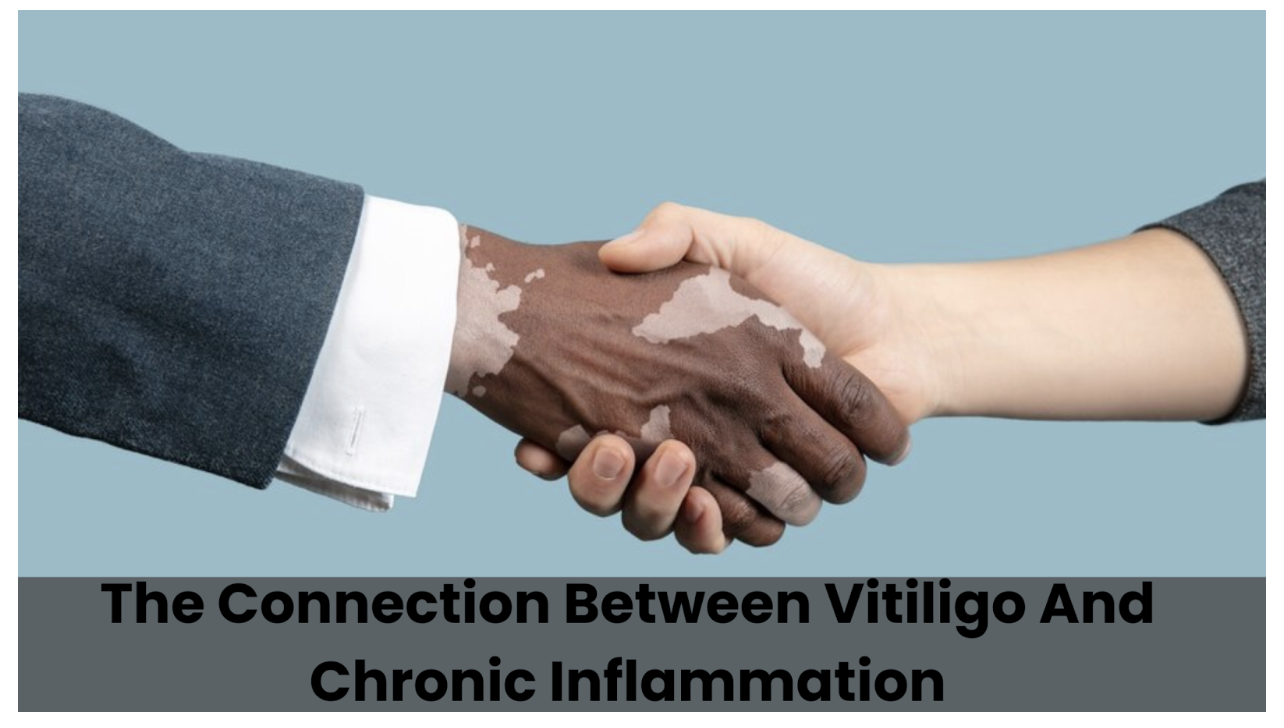 Chronic inflammation plays a huge role in the development and spreading of vitiligo.
How, you may wonder!
Inflammation triggers autoimmune reactions that attack melanocytes, the cells responsible for producing skin pigment.
Summary
Inflammation is believed to set off an autoimmune response against melanocytes in vitiligo. This will eventually lead to the demolishing of melanocyte cells that cause skin pigmentation.
Some inflammatory cytokines involved in melanocyte destruction and, thus characteristic depigmentation in vitiligo spots, are TNF-alpha and interleukins.
However, red light therapy reduces chronic inflammation and with regular sessions, you may get faster and long-term results.
What is Chronic Inflammation?
Inflammation is basically how the body fights against infection of the affected area to return to its better state, whether due to an injury or invasion by toxins.
During the time of probing cells, there are certain chemicals emitted that stimulate the immune response. This is done by discharging proteins and antibodies and also increasing blood flow in the affected region.
Now, this is in the case of acute inflammation where a duration of a few days normally suffices.
If that response continues, a state of chronic inflammation follows, in which the body is constantly on full alert. This certain state of chronic inflammation leads to damage to tissues and organs.
What is Vitiligo?
Vitiligo is a disease that results in skin discoloration, making the skin tone lighter or entirely white. The patches of skin that lose pigment are known as macules.
Sometimes, vitiligo results in the development of white or silver hair in the area of hairy skin where the disease is occurring.
Who Does Vitiligo Affect?
Vitiligo is a condition that can happen to anyone. Autoimmune diseases such as the following pose a risk factor for acquiring vitiligo:

Vitiligo can also occur in anyone at any age factor, but more often than not patches appear to show up before the age of thirty.
Check Out These Reddit Threads To Know What People Have To Say About This Disease
Why is vitiligo called a “disease” and not just a visual difference? : r/biology
r/Vitiligo
Is Vitiligo Linked to Inflammation?
Vitiligo is an inflammatory condition! The reason is it involves an immune response against the production of pigment-producing cells.
These inflammatory signals shift the immune response to destroy pigment-producing cells.
Moreover, certain cytokines also contribute to developing vitiligo. Although it is not an inflammatory condition, vitiligo covers the inflammatory responses and can spread it. This is why, controlling your inflammation would control the vitiligo spread.
What Are The Inflammatory Markers In Vitiligo?
The inflammatory markers identified in vitiligo are several cytokines and immune cells. The major markers are TNF-α, IL-6, and IL-1β, whose levels are extremely high in the lesional skin.
These cytokines tend to propagate the immune response against melanin-producing cells.
Other reported markers are increased IFN- komplex γ and chemokines such as CXCL9 and CXCL10, which tend to attract the cells of the immune response to your skin.
These markers document the existence of an active inflammatory process with ultimate destruction of melanocytes, leading to the characteristic depigmentation of vitiligo.
Possible Chronic Inflammation and Vitiligo Treatment
Vitiligo is a chronic inflammatory pathway, responsible for therapeutic potential to reduce inflammation and immunological reaction. Following are some treatment options:
Topical Corticosteroids
- Suppress inflammation
- Immunosuppressive
- Suits the localized type of vitiligo
Topical Calcineurin Inhibitors
- Tacrolimus
- Pimecrolimus
- Anti-inflammatory activity with no side effects as produces with steroids
- Used in vitiligo on sensitive areas such as the face and neck
Phototherapy
- NB-UVB therapy
- Suppress skin immune activity
- Repigmentation
Excimer Laser
- Locally targeted
- Used for widespread or rapidly expanding vitiligo
- Are limited to short-term treatment due to side effects
JAK Inhibitors (Tofacitinib, Ruxolitinib)
- They act on the JAK-STAT pathway, a part of the immune system.
- Though slow-acting, these drugs are proven to halt the progression of the disease
Antioxidants
- Work against oxidative stress
- Both vitamins C and E are the most used in combination.
- Immunosuppressants (Methotrexate, Cyclosporine)
Supportive Therapies
Psychological support and counseling for social and emotional disability associated with vitiligo.
Emerging Treatments:
- New anti-inflammatory drugs.
- Biologic agents are active against specific inflammatory pathways.
Note: A treatment plan catered to the response in individual patients. Monitoring for both therapeutic response and side effects.
Check Out On This Video For More Insights On The Vitiligo Treatment
Doctor explains VITILIGO TREATMENT OPTIONS | Phototherapy, excimer laser, steroids & more
Frequently Asked Questions
What Are The Types of Vitiligo?
Segmental and generalized are the two types of vitiligo. However, generalized vitiligo (nonsegmental vitiligo) most frequently occurs in people.
What Autoimmune Disease Is Associated With Chronic Inflammation?
RA—Rheumatoid Arthritis—can result from your immune system releasing antibodies that settle on the lining of your joints. This might then easily stimulate an immune response wherein your immune cells attack the joints and cause:
- Inflammation
- Swelling
- Pain
What Causes Vitiligo?
Melanin insufficiency mostly causes vitiligo. When you have this condition, there are not enough melanocytes to produce enough melanin. This is the case when white patches appear on your skin.
What Are Alezzandrini Syndrome And Vogt-Koyanagi-Harada Syndrome?
Alezzandrini syndrome relates to Vogt-Koyanagi-Harada (VKH) syndrome, sharing similar eye and skin symptoms, but differs as Alezzandrini syndrome is usually unilateral.
Unlike VKH syndrome, Alezzandrini syndrome does not involve neurological issues such as damage to the eighth cranial nerve or sterile meningitis.