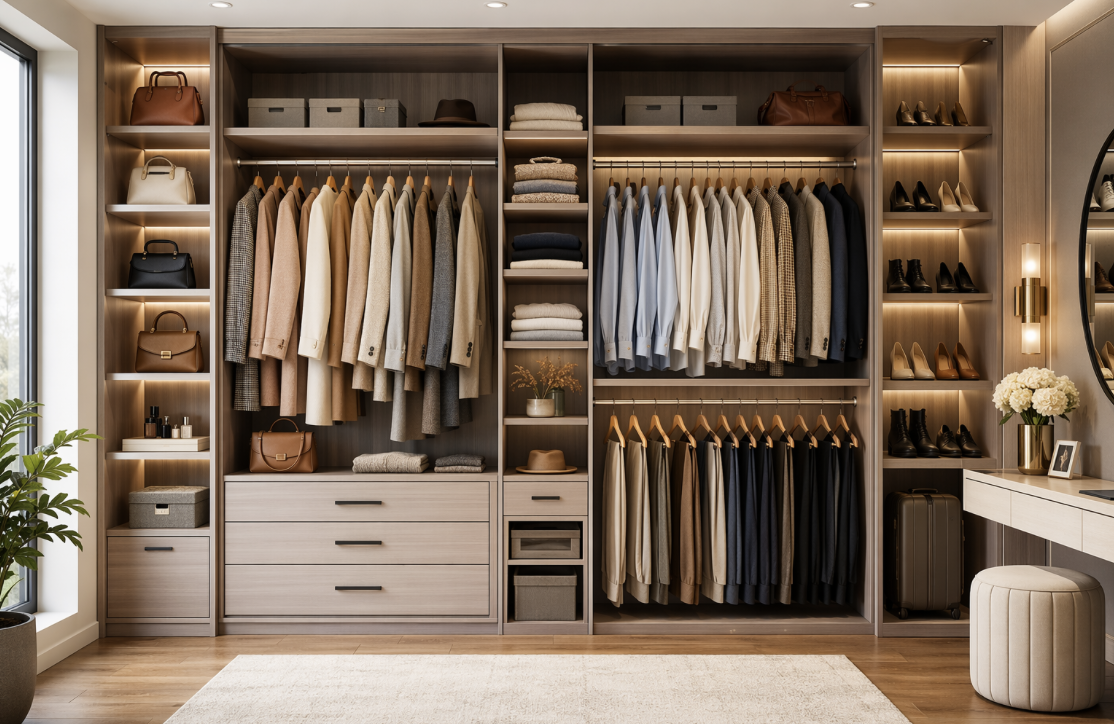
Wardrobe Storage Buying Guide for Every Home
Key Highlights
- Good wardrobe storage solutions start with your daily routines, not just shelf count.
- Closet organisation works better when you separate seasonal storage from everyday garments.
- A modular system helps you adjust compartments as your storage needs change.
- Small rooms benefit from vertical space, slimline tools, and a compact shoe rack.
- Accessories stay tidy when drawer organisers and storage boxes give each item a home.
- Built-in and freestanding options both work well if they leave enough room to move.
Introduction
Wardrobe storage can make your bedroom feel calmer or more chaotic. If your closet space is packed with blouses, sweatshirts, scarves, and shoes, the right storage solution helps you find what you need faster and keep clutter under control. This guide breaks down practical choices for every home, from small closet upgrades to full closet organisation ideas. You’ll see what to buy, what to skip, and how to match storage to the way you actually live.
Understanding Wardrobe Storage Needs for Every Home
The best wardrobe storage solutions support your daily routines, so your most-used garments sit at eye level, and your accessories are easy to grab. If you wear blazers to work, they need a different space than long dresses or folded sweatshirts. Good close organisation begins by grouping clothing by type, use, and size.
Choosing Between Built-in and Freestanding Wardrobe Storage
A built-in wardrobe usually suits rooms where you want a cleaner look and a closet system that uses every inch. It can make awkward walls more useful and give you fixed compartments for garments, accessories, and shoe storage. If your bedroom closet has limited floor space, this option often creates a neater layout with stronger functionality.
A standalone wardrobe unit works well when you need flexibility. You can move it, rework the room, or use it in a rental without changing the structure. This can be a smart pick if you are testing what storage solution fits your habits before committing to a built-in wardrobe. The key is simple: choose the option that gives you enough room for hanging, folding, and easy access. Small spaces need even more careful planning, which is where compact solutions matter most.
Essential Wardrobe Storage Solutions for Small Bedrooms
A small closet needs smarter use of space, not just more containers. Small closet organisation works best when you stack storage upward, reduce wasted gaps, and keep only current-use items in easy reach. That approach gives you a practical closet makeover without taking over the room.
One of the most effective fixes is a modular system that uses vertical space. Add-on shelves, hanging organisers, and compact shoe storage help you store more while protecting floor space. The next two sections cover the most useful tools for that job.
Slimline Hangers, Under-bed Storage, and Over-door Organisers
If you want a fast win, start here. Slimline hangers reduce bulk, under-bed storage frees the wardrobe for daily items, and over-door organisers turn ignored areas into useful storage. This is one of the easiest ways to improve a small closet without a full refit.
A common pain point is crowding on the rail. Thick hangers waste room, and shoes on the floor block access. Try these practical swaps:
- Use slimline hangers for blouses, blazers, and lighter garments.
- Store seasonal items in under-bed storage boxes.
- Hang scarves or small accessories in over-door organisers.
- Keep floor space open for a narrow shoe rack.
- Reserve standard hangers for heavier pieces only.
That setup creates a clearer path from getting dressed to putting things away. It also supports tidier daily routines because each item has a clear place.
Modular Shelving and Vertical Space Maximisation
The best way to organise your wardrobe for maximum storage space is to use modular shelving and assign each zone by frequency of use. Put daily items in the middle, less-used pieces on the top shelf, and boxed seasonal storage above or below. That short answer works because it cuts wasted closet space.
Modular shelving helps you adapt the layout as your wardrobe changes. A reader with a single rod and piles of folded sweatshirts can add two shelves above the rod and instantly create separate zones for garments, storage boxes, and accessories.
| Area | Best use |
| Top shelf | Seasonal items, storage boxes, and less-used accessories |
| Middle section | Daily garments, blouses, blazers, easy-reach organisers |
| Lower section | Shoe storage, stackable bins, folded items |
| Side gaps | Hanging shelves or slim compartments |
Used well, vertical space turns a cramped wardrobe into a more balanced modular system.
Must-Have Wardrobe Organisers and Accessories
Wardrobe organisers help you stop losing space to messy piles and mixed-up accessories. The most useful organisers create small compartments inside bigger storage areas, so socks, scarves, and folded basics do not slide into each other. This is where many closets fail.
Drawer organisers, bins, and hanging tools are especially helpful when your wardrobe has limited built-in features. They give structure to an ordinary unit and improve functionality without major changes. Let’s look at the options that solve the biggest storage frustrations first.
Drawer Dividers, Boxes, and Stackable Bins
Boxes and organisers keep clothes tidy by separating categories and stopping overflow. If your wardrobe relies on a single rod, these tools add much-needed compartments without changing the structure. They are especially useful for smaller garments that disappear into larger shelves.
A practical setup might use one drawer for accessories, one shelf for stackable bins, and labelled storage boxes for off-season pieces. This saves time in the morning and makes it easier to return items after washing.
- Use drawer dividers for socks, underwear, and scarves.
- Choose storage boxes for seasonal storage or last year’s extras.
- Add stackable bins under hanging clothes.
- Group similar garments in separate compartments.
- Label bins so you do not reshuffle everything each month.
That structure turns loose storage into a system you can maintain. It also makes your closet organisation feel less like a similar manual process every weekend.
Specialty Hangers, Hanging Shelves, and Shoe Racks
Some items need more than a basic hanger. Specialty hangers help awkward garments stay in shape, while hanging shelves create soft storage for folded clothing and accessories. A shoe rack keeps pairs visible, which is better than a pile at the wardrobe base.
If you have limited shelving, these add-ons can solve very specific problems:
- Use specialty hangers for long dresses, blazers, or delicate garments.
- Add hanging shelves for sweatshirts and folded tops.
- Keep scarves in one section instead of mixing them with drawers.
- Use a compact shoe rack to separate everyday pairs from occasion shoes.
- Store lightweight accessories in side organisers.
This works well because each tool handles a different type of item. Your wardrobe feels easier to use when the storage matches the shape and weight of what you own.
How to Install Shelving and Maximise Existing Wardrobe Space
Adding shelving is one of the most practical closet organisation ideas because it creates compartments where there were none. If your wardrobe has a lot of empty air above hanging clothes, that space can usually hold a top shelf or extra levels for folded items.
Before you begin, measure the width, depth, and height you can spare without crowding long garments. A simple change in shelving often improves storage faster than replacing the whole unit. The next steps make that process easier to plan.
Step-by-Step Guide to Adding Extra Shelves
To install additional shelving in your existing wardrobe, first measure the available closet space and decide what each shelf will hold. That direct approach prevents shelves from being placed too close together or too high to use. Good closet organisation starts with function, not guesswork.
For example, a bedroom closet with one rail and open space above it can often fit a top shelf for storage boxes and a lower shelf for folded garments. That gives the closet system more structure without changing the whole setup.
- Measure the width, depth, and shelf height needed.
- Check the space below for long dresses and hanging items.
- Mark where each shelf will go.
- Assign each shelf a purpose before loading it.
- Use upper shelves for less-used items first.
Once added, shelves should reduce clutter, not create more. Keep the most-used items easy to reach and move seasonal storage upward.
Tips for Creating a Customised Interior Layout
A customised interior works best when it reflects how you get dressed each day. If you mostly wear folded casual clothes, you need more shelves than hanging room. If you wear blouses and blazers often, your closet system should protect hanging space first. That is what improves functionality.
Try building your layout around zones. One section can hold daily garments, another can handle accessories, and a third can store seasonal items. This avoids the common problem of mixing everything into one crowded area.
- Keep daily-use items in the easiest-to-reach compartments.
- Give shoes and accessories their own defined zones.
- Match shelf height to item type instead of making every shelf equal.
- Review the layout after a few weeks and adjust weak spots.
The goal is not perfection. It is a setup that feels natural enough to maintain.
Conclusion
In conclusion, effective wardrobe storage is essential for an organised and functional home. By assessing your needs, choosing the right solutions, and maximising vertical space, you can turn even small bedrooms into efficient storage areas. Custom organisers improve accessibility and showcase your style. Regular decluttering keeps your wardrobe efficient. With these tips, you’ll create a practical and stylish wardrobe that fits your needs.
Frequently Asked Questions
What is the most effective way to declutter my wardrobe?
The most effective method is to sort by daily routines and remove anything that does not support them. Move seasonal items out of easy reach, group like with like, and use wardrobe storage solutions that reduce clutter. Strong closet organisation starts with keeping only what fits your current use.
Are affordable wardrobe storage solutions available in Australia?
Yes. Affordable storage options are commonly available through Kmart, IKEA, and Bunnings, especially for boxes, organisers, shelving, and shoe storage. The key is choosing each storage solution by purpose, not price alone, so you build a setup that actually improves access and keeps items tidy.
How do I keep my wardrobe tidy day-to-day?
Keep your system simple enough to repeat. Return garments to the same spot, use organisers for small items, and review overflow before it turns into a pile. Wardrobe storage solutions work best when closet organisation fits your daily routines and supports easy functionality rather than adding extra steps.