The New Wave of Indie Games: How small studios outperform the giants
For many, games are a form of entertainment, for some, they are a profession, and for some, it’s a sport. So, what do mean by these often weird, unassuming projects created by small teams? Are they art or a joke?
You’ve probably encountered sales featuring pixelated, hand-drawn, primitive, or eccentric games under the broad category of Indie Games. These games are the birthplace of new genres, professional careers, and vibrant gaming communities. While some fade into the sea of pixelated copies, others rise to cult status, competing in ratings with AAA titles.
Minecraft
To better capture the essence, let me provide two examples of indie games that have become icons of the industry.
Markus “Notch” Persson, initially a developer at King, created Minecraft as a personal project after experimenting with game prototypes like RubyDung, inspired by Dwarf Fortress and Infiniminer. He made available the first version on May 17, 2009, adding RPG elements and a first-person view with a blocky graphical aesthetic. The development of the game unfolded through continual releases, coming to a culmination in its fully release version at 1.0 on November 18, 2011, before Persson handed over the reins to Jens “Jeb” Bergensten.
In September 2014 Microsoft made a $2.5 billion buyout of Mojang and the game Minecraft after Persson sold his stake, prompted by public outrage over the game’s EULA. This deal cemented Persson’s status as a billionaire.
Notch’s project was the result of his passion and craftsmanship. He single-handedly developed the game and later expanded it with a friend, exemplifying the scale and ambition of indie developers. Everything started with very simple mechanics and without grand ambitions.
Through continuous improvements, the project grew into a commercially viable game. Between 2011 and 2013, Minecraft made waves among YouTubers and gamers, who scrambled to find ways to download this blocky sandbox. It was a hot, standalone project – mysterious in its simplicity – that captivated the industry. Giants like Microsoft recognized its potential, seizing the chance to scale it to new heights.
Indie-games Specific
Before writing the second iconic project story, I remark on specific qualities of indie games and compare them with esports. Both Minecraft and Disco Elysium compete with major titles like MOBAs and PvP shooters. However, their appeal differs: the former captivates players with the core essence of its gameplay, while the latter thrives on dynamic support, regular updates, and a competitive ecosystem. While games like League of Legends or Dota 2 turn players into fans who research D2 or LoL esports teams and analyze gameplay statistics, indie games like Disco Elysium create enthusiasts who explore and discover new experiences.
Esports also possess their own beauty – this is not to diminish their value – but they are built with different objectives and developmental paths. This distinction is what I aim to highlight.
Disco Elysium
 Disco Elysium was created by ZA/UM, a studio founded in 2016 by Estonian novelist Robert Kurvitz, who also served as the lead writer and designer. The game’s origins trace back to 2001 when Kurvitz, then part of the band Ultramelanhool, conceived a fictional steampunk-like world during a creative session inspired by Tiësto’s “Adagio for Strings.” This idea evolved into a tabletop RPG inspired by Dungeons & Dragons, developed collaboratively with artists, including Aleksander Rostov.
It is a role-playing game with an emphasis on open-world navigation and conversational storytelling. Presented in an isometric perspective, players control a detective suffering from amnesia caused by substance abuse as he investigates a murder case. The detective gains a partner, Kim Kitsuragi, who offers guidance and a professional perspective.
Instead of a standard battle, the game relies on skill tests and branching dialogue paths. There are 4 main characteristics (Intellect, Psyche, Physique, Motorics), each with 6 related skills, a total of 24. Attributes influence behavior and are influenced by fashion, skill gains, and dice rolls, which may lead to the emergence of individualized character characteristics. E.g., high Drama is useful for deception but makes hysterics riskier, whereas high Electrochemistry is useful for drug resistance but is likely to induce addiction.
Disco Elysium hit incredible success, taking the top-notch of the four Game Awards 2019 nominations in every single one of the categories it was nominated (the most for any game that year). It earned Slant Magazine, USGamer, PC Gamer, and Zero Punctuation Game of the Year. Moreover, Time featured it among the best 10 games of the 2010s. The game was further recognized with a 2020 Nebula Award nomination for Best Game Writing for the narrative quality of the game.
Top Indie Games Released in 2024
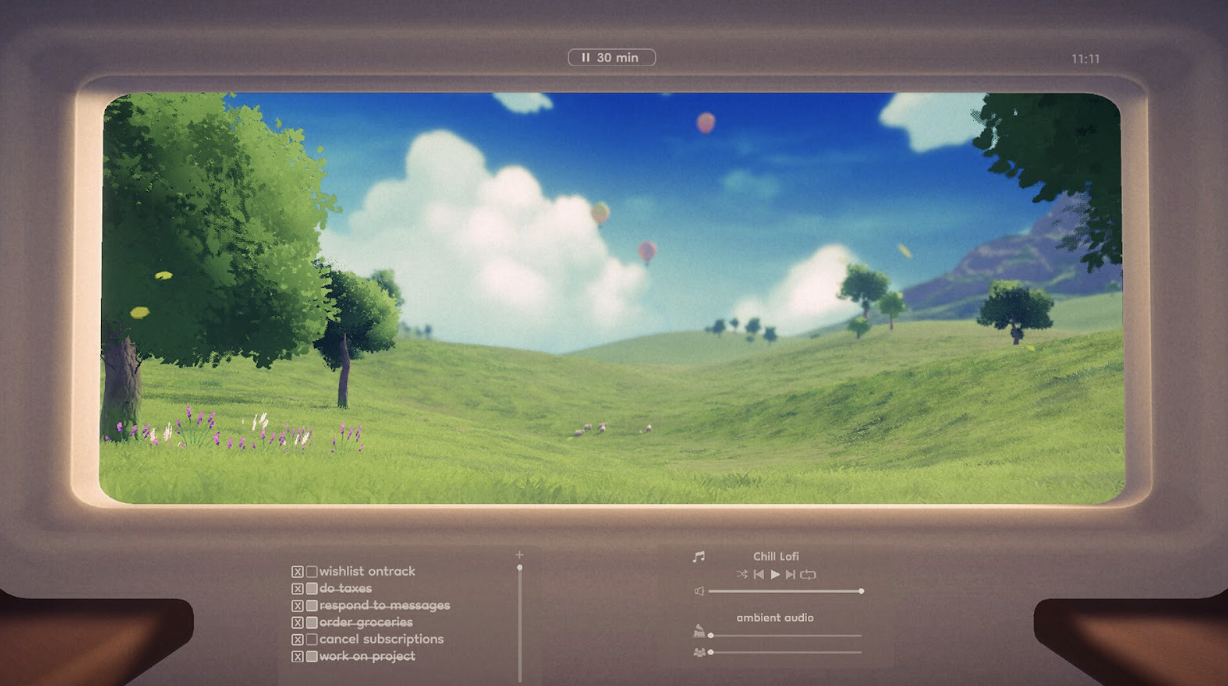
Let’s consider examples of radically different genres: an indie game can be anything from a first-person shooter to a planner for your tasks, complete with meditative landscapes outside the window!
- Mullet MadJack – players take control of Jack Banhammer, a “Moderator” whose job is to clear each level in 10 seconds with additional seconds given up by killing enemies, using a special killing move, and eating from the contents of destroyed vending machines. Death resets upgrades, but weapons and upgrades can be bought between levels. Weapons that can be obtained are firearms (e.g., shotguns, plasma rifles) as well as elemental katanas.
- On Track – a cozy productivity tracker to help you rejuvenate, relax, and focus on tasks you want to accomplish. Watch a lush landscape roll by as you watch from your cozy train seat. Set a timer to focus, manage a to-do list with all your goals, and relax as you stay on track.
- #BLUD – Rescuemates, fight a vampire dystopia, and handle the worst freshmen field hockey practices in #BLUD. This cute and odd animated dungeon crawler blends elements of action RPG with the hyperkinetic style of 90s cartoons.
- Fruitbus – set out on a flavorful adventure in your cozy, customizable food truck! Gather fresh ingredients to craft a unique menu, serving up heartwarming home-cooked meals that nourish both body and soul. Transform the world, one apple at a time.
- Wéko the Mask Gatherer is a 3D action-adventure game where you step into the shoes of Wéko, a mysterious adventurer on a quest to collect the seven powerful Primordial Masks in a mesmerizing world full of exploration, puzzles, and combat.
Of course, there have been more projects in recent years, and it’s impossible to cover them all, but this selection of five is a great starting point! Pick the game that interests you the most from the list and explore its page on online purchase platforms – there you’ll surely find recommendations for similar games.
Conclusion
Since we’ve examined new releases through the lens of indie games as a broader phenomenon, it’s fair to say there hasn’t been significant progress overall. However, new genres continue to emerge, such as On Track, while existing ones are refined or reimagined by passionate developers dedicated to their craft.
Indie games are a space for experimentation and workshops where future masterpieces like Super Meat Boy or Stray are born. They go for risk but it might be leading to innovative gameplay and narratives that modify traditional gaming norms.