Targeting Deep Perioral Folds: Matching Filler Elasticity to the High-Movement Areas of the Lower Face
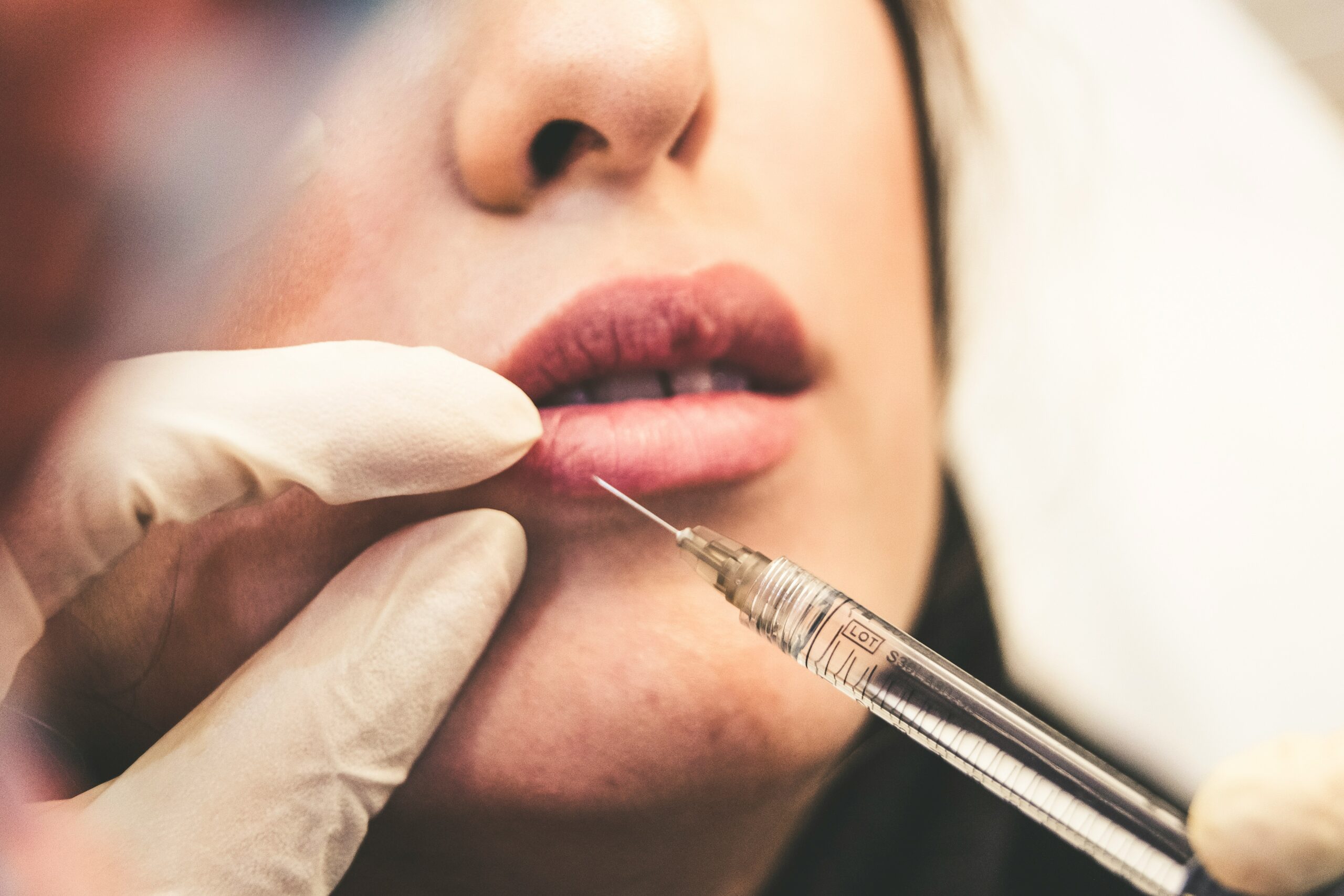
Deep creases around the lower face present a distinct structural puzzle. When an individual smiles, speaks, or chews, the skin and underlying soft tissues endure constant lateral shear, compression, and stretching. Treating fixed lines in a static region is straightforward; restoring depth in a zone that constantly contracts demands an entirely different approach to product selection. Traditional dermal gels were designed to act as firm, immobile boluses. When placed into zones driven by heavy muscular activity, those rigid structures often buckle, displace, or form visible lumps.
Addressing perioral fold restoration effectively requires a shift away from pure volumetric lifting toward dynamic tissue integration. Practitioners need to evaluate how an injectable implant behaves under real-time physiological strain rather than how it looks while the patient sits completely still in an examination chair.
The Biomechanical Challenge of the Perioral Zone
The lower face is governed by complex muscle interactions. The orbicularis oris, zygomaticus major, risorius, and depressor anguli oris continuously exert multidirectional forces on the dermis and subcutaneous fat pads. Perioral biomechanics and facial animation create an environment where soft tissue experiences thousands of micro-deformations every single day.
Because of this constant activity, deep perioral rhytids and nasolabial folds cannot be treated with a one-size-fits-all approach. The tissue here requires a filler that balances supportive lift with continuous movement. When an injectable material lacks sufficient structural elasticity index, it fails to rebound after muscle compression. Over time, that failure leads to product migration, surface irregularity, or rapid mechanical breakdown.
A 2020 study analyzing facial soft tissue deformation during expression showed that perioral skin stretches up to thirty percent during normal speech and smile cycles. If an injected matrix cannot match that degree of deformation, it separates from the surrounding matrix. Soft tissue resilience relies on the filler moving in tandem with native collagen and elastin fibers rather than acting as an opposing, rigid barrier.
Dynamic Rheology and Viscoelastic Properties
Evaluating dermal fillers for high-movement lower face aesthetic treatments involves looking past basic concentration numbers and looking directly at rheological metrics. Rheology describes how matter flows and deforms under applied force. Two primary measurements dictate performance in motion: elastic modulus, represented as G prime, and viscous modulus, represented as G double prime.
High-modulus structural firmness is ideal for deep periosteal placement where the goal is replicating bone structure, such as the chin or zygomatic arch. However, in the superficial and deep dermal layers of the perioral zone, excessive G prime creates unnatural rigidity. Practitioners must evaluate dynamic flexibility vs high-modulus structural firmness when selecting an implant for these mobile planes.
- The elastic modulus (G prime) measures stored energy and structural firmness.
- The viscous modulus (G double prime) measures energy dissipated under shear stress.
- The loss factor (tan delta) reflects the ratio between viscosity and elasticity, indicating overall flexibility.
Gels designed with optimized dynamic rheology and viscoelasticity maintain their shape when resting, yet yield smoothly when subjected to muscular shearing forces. Once the pressure subsides, the gel snaps back to its intended position without altering the surrounding facial contours.
Advanced Hyaluronic Acid Cross-Linking Technology
The chemical structure of a gel dictates its mechanical behavior inside the tissue matrix. Hyaluronic acid cross-linking technology determines how tightly the polymer chains are bound to one another. Highly cross-linked, dense matrices offer long-lasting voluming power, but they often lack the fluid elasticity needed for expressive zones. Modern cross-linking methods adjust the length of the HA chains and the density of the cross-linker to create variable network densities.
Teosyal represents a line of dermal fillers engineered specifically to address these varying anatomical demands through advanced cross-linking science. Developed by Teoxane Laboratories, Teosyal utilizes Resilient Hyaluronic Acid technology, designed to preserve the long chains of native hyaluronic acid while incorporating dynamic cross-links. This unique structural formulation allows the gel to stretch and contract in harmony with expressive facial movements without losing its internal integrity or causing localized stiffness. Because of this balance between flexibility and cohesive support, Teosyal is widely utilized for restoring smooth contours in highly mobile facial areas like the perioral region. Sourcing authentic products from a reliable Teosyal supplier for practitioners ensures that clinical settings maintain direct access to these specialized dynamic formulations. Utilizing high-quality Teosyal gels allows injectors to match specific cross-linking densities directly to the depth and severity of the fold being targeted.
Understanding these structural differences helps practitioners avoid using dense, static gels where dynamic flexibility is paramount. High-cohesivity vs high-elasticity hyaluronic acid represents a critical choice during treatment planning. High cohesivity holds a gel together against compression, while high elasticity allows it to stretch along movement planes.
Injection Depth and Technique for High-Movement Zones
Selecting the correct product is only half the equation; placement depth determines whether the material integrates or fails. Deep dermal injection technique requires careful navigation of the subdermal layers to avoid superficial bead formation while staying high enough to cushion the crease.
Placing product too superficially in the perioral area risks creating visible blue-tinted shadows, known as the Tyndall effect, along with palpable nodularity during speech. Conversely, injecting too deeply into the muscular layer subjects the gel to excessive mechanical shearing, accelerating its degradation rate.
Subdermal voluming and contouring in mobile zones is often best accomplished using a blunt-tipped cannula rather than a sharp needle. Cannulas pass through tissue planes with minimal trauma, distributing the gel evenly along natural movement lines. Linear threading and retrograde fanning techniques allow the material to lay in thin, parallel strands, creating a supportive lattice that bends naturally with every movement.
Facial tissue elasticity naturally declines with age, meaning mature skin has less native rebound capacity. When treating older patients with deep folds, the tissue matrix needs subtle structural reinforcement alongside dynamic flexibility. Injecting small, micro-droplet quantities across multiple planes often yields a far more natural result than placing a single concentrated bolus in the deepest point of the fold.
Clinical Outcomes and Long-Term Tissue Interaction
The ultimate test of any dermal filler in the lower face is its performance over six to twelve months of daily facial animation. Gels that lack flexible cross-linking tend to fragment into smaller fragments under constant micro-movement, leading to unpredictable volume loss. Gels engineered for dynamic movement maintain structural continuity, degrading uniformly over time.
Clinical reviews monitoring filler persistence in nasolabial folds indicate that flexible HA networks preserve aesthetic correction longer in high-movement areas compared to rigid gels of higher concentration. The preserved long-chain structure mimics natural extracellular matrix components, encouraging smooth tissue integration without triggering excessive late-stage swelling or inflammatory encapsulation.
A successful outcome in the perioral region means the fold is softened, the skin looks hydrated, and the face remains completely natural in motion. Matching filler rheology to local tissue mechanics transforms perioral restoration from a static padding exercise into a precise biomechanical restoration. When injectable materials work alongside natural muscle forces rather than fighting against them, patient satisfaction increases while complication rates drop significantly.