Parenting: 5 Safety Tips for Designing an Outdoor Play Area
 Children love to play outside; it is one of the best things about being young.
It is the best place for them to have fun, explore, learn new things, and test their physical abilities. Keeping your children safe while they are playing outside does require some precautionary measures.
When designing the best outdoor space for your little ones, you must become an advocate of the natural play movement. Natural play enables your children to grow, learn, and thrive with the help of the natural world.
If you need some guidance on how to achieve this, below are five tips for designing a safe outdoor play area for your children:
1. Core Values
The first step when designing the perfect outdoor play area for your children is to connect with your core values as a parent.
What do you want your children to experience when they are playing outside? Consider what you would like to prioritize in terms of educational experience, traditional outdoor apparatus, learning in nature, and even messy play.
Reflect on your childhood experiences outdoors and incorporate similar elements into your child’s outdoor play area.
The right outdoor play area can complete your family-centred home.
2. Chose The Right Area
Choosing the right area for your child’s outdoor play space is essential to ensure a happy and safe experience.
Find a spot with enough shade to protect your children from extended sun exposure in the summer months. If your garden does not have natural shade from trees, put up an awning or shelter to provide some shade.
Place all metal playground equipment in the shade to prevent burns and face the slide north to ensure it receives the least direct sunlight. As you map out the footprint, consider the ground surface too: install impact-absorbing rubber mulch for playgrounds to cushion falls, improve drainage, and keep the area tidy year round.
3. Demarcate The Area
To keep your little ones as safe as possible, demarcate the areas for them to play in.
Not every inch of your outdoor space will be safe for your children, so use playground borders to help them identify the area they are encouraged to play in.
These borders are effective at retaining safety materials such as beach sand, and they emphasize the playground area. They are easy to install and do not require any special tools.
Choose the kit that best suits your child’s outdoor playground area and install them to avoid unnecessary injuries.
4. Use Soft Surfacing
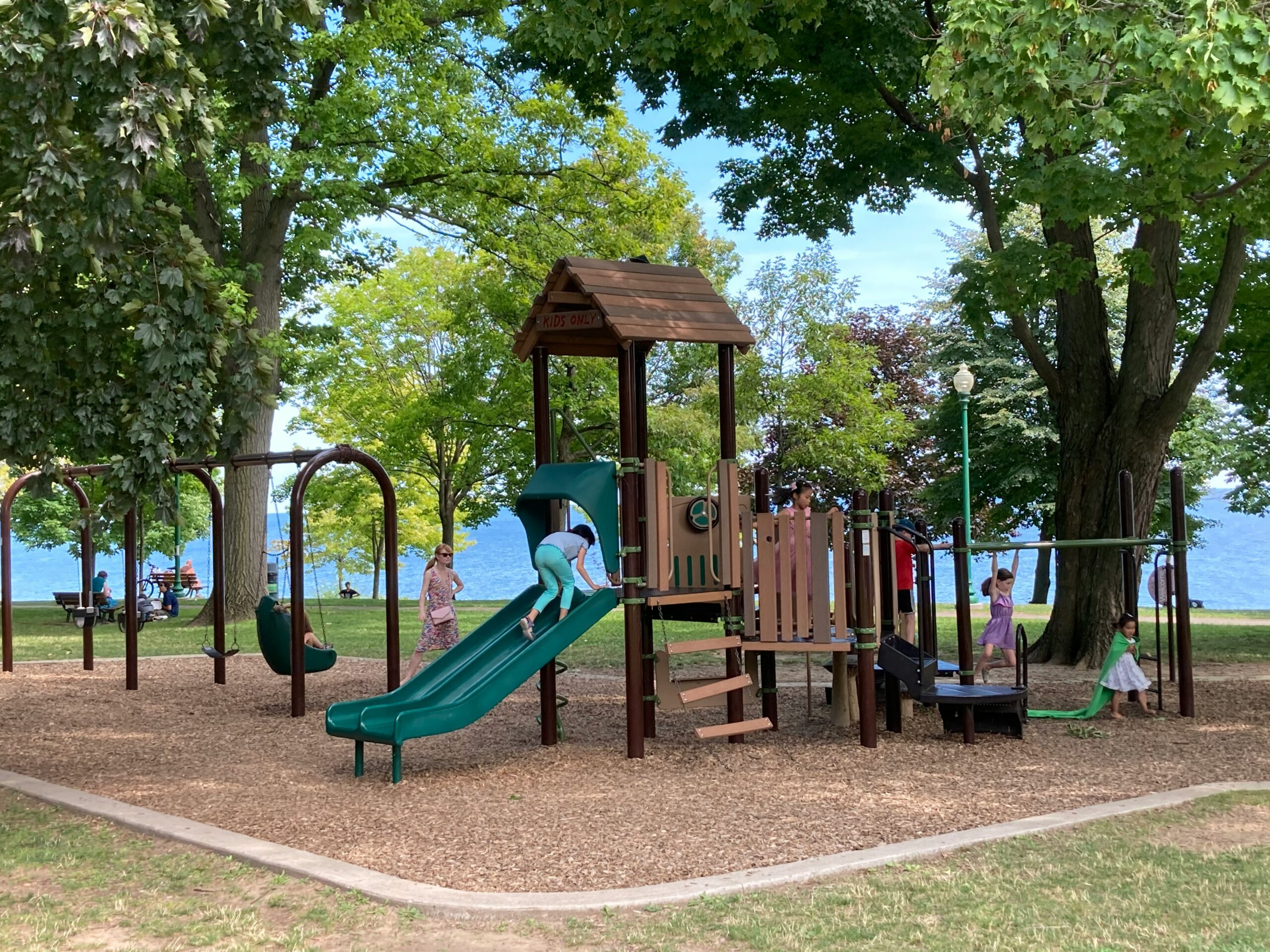
To reduce the risk of fall injuries, ensure that all playground equipment has soft surfacing underneath it.
Use materials such as, sand, pea gravel, wood chips, or rubber mulch to absorb falls. Grass alone is not enough to absorb the shock of a fall, so use soft surfacing over the grass to keep your children safe.
Never install loose-fill surfacing over hard surfaces like concrete or tar. Surface materials must be a minimum of 6 inches deep for equipment less than 4 feet high, and 9 to 10 inches deep for equipment up to 8 feet high.
5. Child-Friendly Plants
Always choose non-toxic plants for your children’s outdoor play area.
Educate them about the different plants in your garden and help them to develop a healthy respect for nature. Creating a sensory garden with child-friendly plants, encouraging them to touch, smell, and experience nature up close.
That will help them to foster a love for nature and teach them about sustainable practices and healthy eating.
Final Note
Outdoor play should be a fun way to learn and improve your child’s physical development.
By following these five easy tips above, your child can be outside, enjoying nature in a safe and healthy environment.