How Storytelling Helps Children Build Confidence and Vocabulary
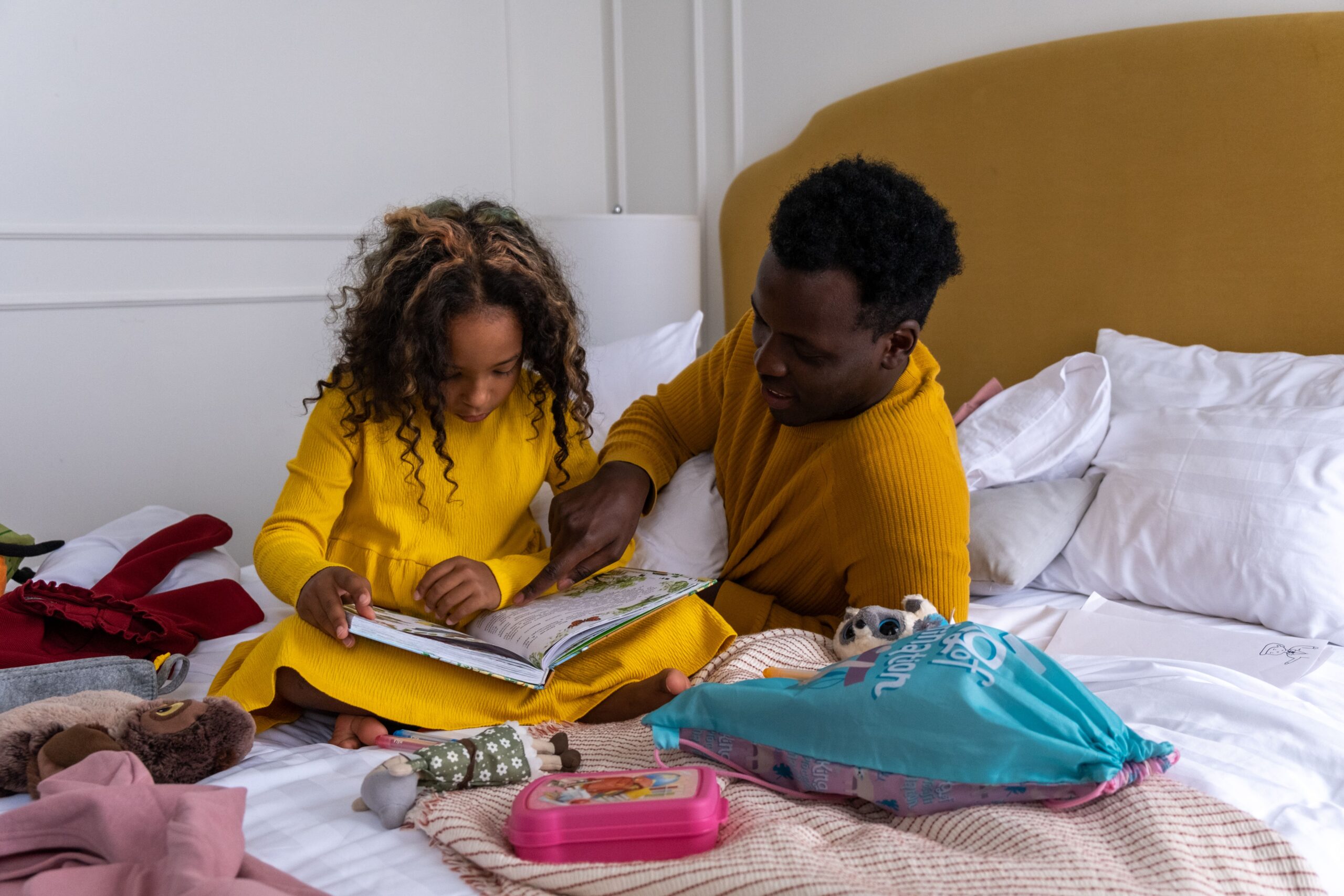
Want to raise a child who speaks up instead of shrinking back?
Storytelling may be the single most underrated parenting tool out there. It’s free. It requires no materials, no device, no pricey course. And it simultaneously benefits two entirely different aspects of language: vocabulary size and comfortability using it.
Here’s the problem:
Kids aren’t reading and telling stories like they used to. Only slightly more than 1 in 3 kids between 8-18 years old say they like reading for fun, and only about 1 in 5 read something every day. That’s important, because literacy and self-esteem are learned through repetition — not chance.
The good news? It’s fixable at the kitchen table.
And in most cases that begins the second they stop reciting someone else’s tale and start telling an entirely new story of their own imagination.
Every story needs a hero. Every hero needs a name. And truth be told, picking fantasy names for characters (Bramblewick! Zerath! Nim The Second!) is frequently a child’s first legitimate creative choice made entirely unsupervised. If they get writer’s block, a fantasy name generator gives them a curated list to respond to, and reacting is a whole lot easier than staring at a blank sheet of paper. Suddenly they aren’t just naming something. They’re shaping who that character is and what frightens them.
That’s where the confidence starts.
Here’s what’s coming up:
- Why Storytelling Grows Vocabulary So Quickly
- How Stories Build Real, Lasting Confidence
- Why Fantasy Names For Characters Do The Heavy Lifting
- Simple Ways To Make Storytelling A Habit
Why Storytelling Grows Vocabulary So Quickly
Everyday conversation is efficient. Stories are not.
No one says to a kid, “cross the dangerous ravine” before dinner. Yet that sentence pops up in stories all the time. Story words are lush, strange and heavily descriptive compared to everyday yammer.
Science supports this. By age five, children who are read to five times per day hear about 1.4 million additional words. Simply reading a book per day will lead to almost 290,000 more words heard by the time a child is 5 years old. Children’s books have about 50% more infrequent words compared to prime-time TV.
Read that again. More rare words than TV.
That’s all there is to it. Uncommon words create your vocabulary, because the common ones you’ll learn without effort. Kids don’t need assistance understanding “car” or “dinner”. They need words like “vanished”, “reluctant”, “ancient” and “betrayed” – words you only encounter when someone is telling you a story.
However, listening is only part of the equation. When a kid tells a story rather than listening to one, something else happens. They have a narrative stored in their mind. They must recall the proper word despite stress. They control the pace and captivate listeners. Reading promotes recognition. Storytelling builds mastery.
How Stories Build Real, Lasting Confidence
Here’s the part most parents miss…
Confidence is not something a child either possesses or lacks. It is a side effect of doing slightly terrifying things and coming out alive.
Storytelling is kind of a genius low stakes version of that. Tell a story and a child controls a room for two minutes and gets a response. No exam. No report card. And every time they do it the fear of public speaking diminishes a little bit.
Nobody Can Correct A Story They Didn’t Write
This is why invented stories beat reciting facts.
There is a right answer and a wrong answer when reading aloud. Kids know that. Every slip-up is confirmation of failure. When the story is theirs, there is no wrong answer. The dragon can be purple. The wizard can be terrible at magic. The kid gets to be boss.
It’s in that transition – from “under evaluation” to “in control” – that reserved kids blossom.
Mistakes Turn Into Plot Twists
Storytelling also teaches recovery, and recovery is what confidence actually is.
Kid loses track of where the story was going. Panics. Makes up a talking badger to wiggle out of it. That’s not failing. That’s thinking on your feet. Problem solving under pressure, with people watching. Do that fifty times and getting called on in class won’t scare you.
Simple, right?
Stories Give Feelings A Vocabulary
There’s also emotional closure. Storytelling children practise articulating jealousy, guilt, relief and pride by proxy, through a character, at arms-length. It’s a lot easier to say “the knight felt left out” than to admit the same thing about yourself – and eventually, that second-hand vocabulary becomes their vocabulary.
That’s a win-win-win.
Why Fantasy Names For Characters Do The Heavy Lifting
Naming sounds trivial. It isn’t.
Choosing fantasy names for characters forces kids to make dozens of miniature creative decisions in under ninety seconds. Does this name sound nice or nasty? Ancient or youthful? Human or other? Tone, sound and characterisation in one go – and they think they’re just playing.
Here’s what naming actually teaches:
- Sound awareness: playing with syllables strengthens the same skills behind spelling and reading.
- Ownership: something is theirs, so characters are much more likely to persist.
- Consistency: Once named, kids will remember what a character does or doesn’t do.
- Vocabulary acquired inadvertently: fantasy words are often based on ancient languages, leading overactive youngsters to research word meanings.
Now watch what occurs. A child decides to name a character Thornwick. Next, questions. Why thorn? Is he prickly? Is he guarding something?
That’s analysis. From a name.
Cool, right?
Simple Ways To Make Storytelling A Habit
None of this requires an agenda or calendar. It just requires ten minutes and some discipline.
Round-robin story telling is the simplest. Person one says a sentence, person two continues, and on and on it goes until it spirals into absurdity. Can be done in the car or around the dinner table. Kids really like it because adults are silly too.
A few more that work well:
- Give three random objects and ask for a story that uses all three
- Retell a familiar tale from the villain’s point of view
- Let them name a character first, then build the story around the name
- Ask “and then what happened?” instead of correcting anything
Ask questions instead of giving feedback. “What did the house smell like?” elicits description. “Why did she do that?” elicits motivation. Each option adds words and never feels like teaching.
And keep it short. Ten minutes of enthusiasm beats an hour of endurance.
Bringing It All Together
Storytelling works because it does two jobs at once.
It nourishes children with luxuriant and uncommon language that everyday speech seldom has time to provide. Plus it gives them guilt-free experience at dominating a room, steadying yourself after you’ve stumbled, and being an expert at something.
To quickly recap:
- Read aloud regularly, even to children who read well alone
- Let them invent stories, not just listen to them
- Start with the character and the name, then build outwards
- Ask questions instead of correcting
- Keep it short and keep it fun
Kids who grow up comfortable with words grow up to adults comfortable with people. Storytelling is simply the cheapest method.