Biophilic Design for Your Bedroom: How Bringing Nature Indoors Improves Your Well-Being
 Could biophilic design be the secret to revolutionising your bedroom into the restful sanctuary you’ve been dreaming of?
This approach to interior design brings natural elements indoors, and science backs the benefits. Studies have shown that exposure to nature, even within indoor settings, can reduce stress, improve cognitive functioning and boost well-being.
Incorporating natural elements in indoor spaces can help reduce stress and improve concentration. So, what is biophilic design, and how can you use biophilic design principles to improve your bedroom?
This piece will walk you through the core biophilic design elements, explore the benefits of biophilic design for your health and show you practical ways to bring nature into your personal space.
What Is Biophilic Design and Why Does It Matter?
The Origins of Biophilia
Psychoanalyst Erich Fromm coined the term ‘biophilia’ in his 1973 work. He described it as “the passionate love of life and of all that is alive”. Biologist Edward O. Wilson popularised the concept in his 1984 book Biophilia. He proposed that humans possess an innate tendency to focus on life and lifelike processes. Wilson’s biophilia hypothesis went further and suggested this connection has a genetic basis rooted in our evolutionary dependence on nature for survival and personal fulfilment.
Your ancestors lived as hunter-gatherers for about 95% of human evolutionary history. This prolonged period shaped your biology in ways that persist even now. Knowing how to read natural environments, respond to wildlife, and seek out resource-rich landscapes became encoded in your DNA. Modern technological advances altered this relationship, especially during the 19th and 20th centuries. They created enclosed spaces that shelter you from natural elements.
 How Biophilic Design Works in Your Home
Biophilic design translates this inherited connection into practical architectural and interior solutions. It increases your connectivity to nature through three main approaches: direct nature (actual plants, water, natural light), indirect nature (natural materials, colours, patterns), and space and place conditions (views and spatial configurations that mimic natural environments).
You now spend about 90% of your time in built environments. Biophilic interior design becomes vital for maintaining that nature connection. Your bedroom offers particular potential for biophilic design elements that support rest and restoration. You spend many hours there.
The Science Behind Nature Connexion
Research reveals a minimum threshold exists for nature’s benefits. Studies show that spending just two hours per week interacting with nature leads to greater satisfaction and better health. This quantifiable dose-response relationship underscores why incorporating biophilic design principles matters in spaces where you spend extended periods.
The mechanism behind these benefits involves multiple pathways. Natural environments activate your parasympathetic nervous system and reduce stress hormones like cortisol whilst promoting calm. Exposure to nature also increases serotonin levels, a neurotransmitter linked to mood regulation. Your brain’s alpha waves respond positively to natural stimuli, from visual greenery to the sound of flowing water. These waves are associated with relaxation and mental clarity.
Core Biophilic Design Elements for Your Bedroom
Biophilic design elements revolutionise bedrooms through strategic implementation of nature-based features. Each element serves distinct functions and works together to create restorative spaces.
Maximising Natural Light
South-facing windows receive the most sunlight throughout the day. North-facing windows provide cooler, diffused light suitable for bedrooms where softer illumination supports restful sleep. Mirrors opposite windows reflect natural light deeper into your space. Light-coloured window treatments and furnishings magnify daylight by reflecting rather than absorbing it. Access to natural light improves overall happiness and well-being by 78%, work satisfaction by 73%, and work performance by 70%.
Introducing Indoor Plants and Greenery
Snake plants convert carbon dioxide into oxygen at night. This makes them ideal bedroom companions. Aloe vera produces oxygen during night hours and absorbs air toxins. Peace lilies increase humidity by up to 5% and purify air. Areca palms absorb indoor pollutants from petroleum products, paints, and wooden furniture. Plants trigger parasympathetic nervous system responses. They lower heart rates and reduce cortisol.
Using Natural Materials and Textures
Wood, bamboo, rattan, and natural stone create authentic connections to nature. Organic materials like linen, cotton, and wool provide breathable, tactile surfaces. Weathered wood and textured stone create visual interest through nature’s variations. These materials ground spaces with nature’s authenticity and champion sustainability.
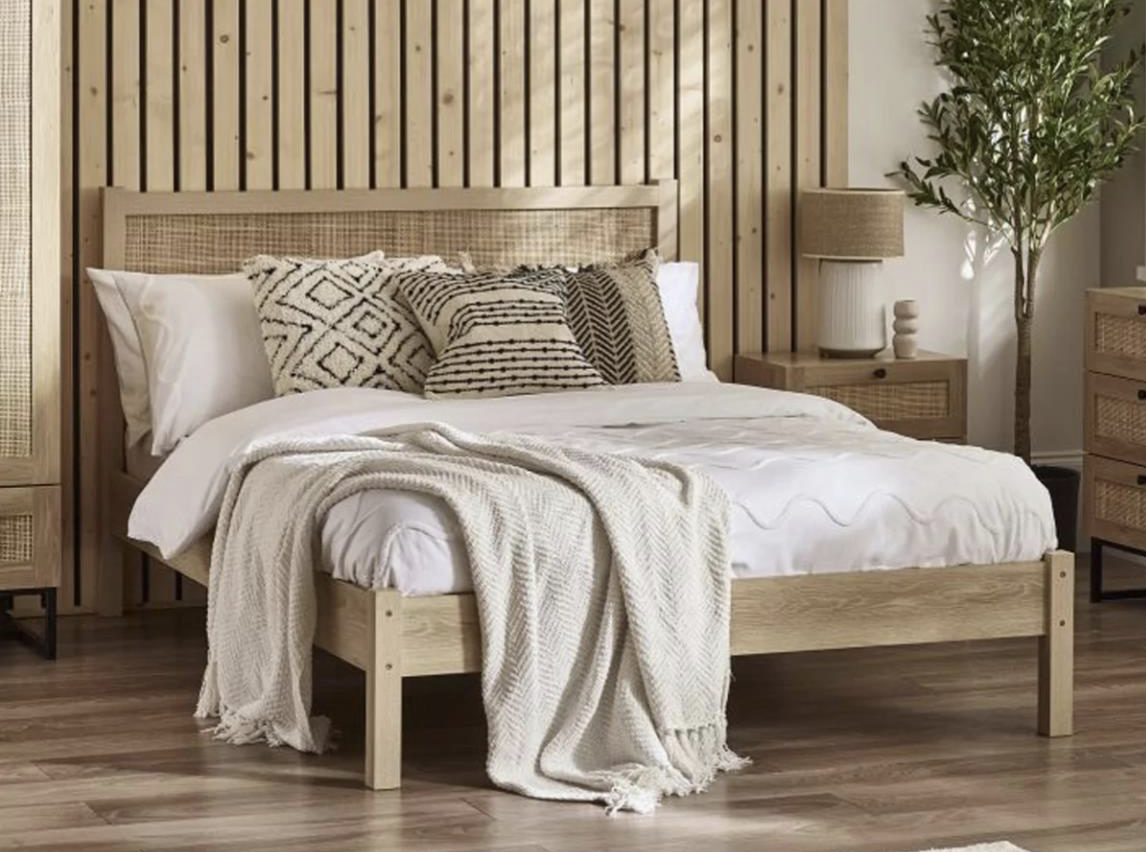 Pictured: Padstow 4FT 6 Double Bed – Oak with Rattan Headboard, available from Bedstar. Priced £329
Incorporating Organic Shapes and Patterns
Biomorphic forms and patterns copy nature’s curves and fractal designs. Organic shapes with smooth corners and sinuous lines evoke natural environments. They create welcoming atmospheres. These forms influence spatial perception and make rooms feel more soothing.
Adding Water Features and Natural Sounds
Indoor water features produce flowing sounds that mask unwanted noise and reduce stress. Water presence lowers heart rate and blood pressure. Tabletop fountains and indoor waterfalls offer sensory escapes from urban environments.
Creating Views and Visual Connexions to Nature
Visual connections to nature reduce stress and lower blood pressure and heart rate. Viewing nature for five minutes produces the greatest effect on mood and self-esteem. Glass doors and well-placed windows blur boundaries between indoor and outdoor spaces.
How Biophilic Design Improves Your Well-Being
Research confirms that biophilic design elements deliver measurable improvements in multiple dimensions of human health. Participants in biophilic indoor environments had better recovery responses after stress compared to non-biophilic settings. Studies show effects appeared right away and peaked within the first four minutes of exposure.
Better Sleep Quality
Access to green spaces makes people 92% more likely to sleep well. Natural daylight regulates your circadian rhythm and melatonin production, the hormone that signals sleep time. Certain plants release oxygen at night through Crassulacean Acid Metabolism and improve airflow while reducing sleep disturbances. Sleep tracking data reveals houseplants in bedrooms can increase deep sleep phases by 37%, the stage where your body performs the work to be done for repair.
Improved Air Quality and Physical Health
Plants purify bedroom air by absorbing carbon dioxide and releasing oxygen during photosynthesis. Snake plants and peace lilies remove toxins including benzene, formaldehyde, and trichloroethylene. This improved air quality produces measurable physical benefits like lower blood pressure, reduced respiratory irritation, and fewer illness symptoms.
Improved Mood and Mental Clarity
Harvard University studies revealed people in green-certified buildings scored higher on cognitive function tests than those in standard spaces. Natural elements reduce cortisol levels and improve mental clarity with focus. Exposure to biophilic design increases positive emotions while reducing negative feelings like fatigue and aggression.
Practical Ways to Bring Nature Into Your Bedroom
Implementing biophilic design principles doesn’t require extensive renovations. Start with achievable changes that build upon the elements you’ve just learned about.
Start Small with Simple Plant Additions
Begin your biophilic experience with low-maintenance plants suited to beginners. Snake plants tolerate low light and need watering only when soil dries completely. ZZ plants prefer shade and resist root rot. Pothos grows quickly in bright light but tolerates low-light conditions. Cast iron plants offer exceptional hardiness with minimal care requirements. You can position plants on window sills, bedside tables, or corners where they receive appropriate light and add visual interest.
Choose the Right Materials for Your Space
Select furniture and textiles crafted from wood, bamboo, and rattan. Organic cotton and linen bedding provides breathable comfort free from harmful chemicals. Wooden bed frames offer density and strength superior to newly harvested wood. Natural fibres replenish themselves continually, which makes them sustainable choices.
Optimise Your Bedroom Layout for Natural Light
Large mirrors placed opposite windows reflect natural light throughout the space. Windows should be cleaned monthly. Light wall colours like cream and beige bounce light around your room. Tall furniture should not be positioned in front of windows or entryways.
Use Colour Palettes Inspired by Nature
Earth tones including greens and browns mimic nature’s palette. Eucalyptus leaves offer peaceful blue-green tones. Terra-cotta and khaki reflect rocky landscapes. Pair neutral beige with olive green and rust to create calming atmospheres.
 Conclusion
Biophilic design offers a straightforward path to changing your bedroom into a restorative sanctuary. The image above shows you don’t need extensive renovations to experience the benefits. Start with simple additions like low-maintenance plants, natural materials and optimised lighting. These elements work together to improve your sleep quality and boost overall well-being. Your bedroom should support rest and recovery. Bringing nature indoors is the best way to achieve that goal.
FAQs
Q1. What exactly is biophilic design and how does it work? Biophilic design is an approach to interior design that brings natural elements indoors to strengthen your connection with nature. It works through three main approaches: direct nature (such as plants, water, and natural light), indirect nature (including natural materials, colours, and patterns), and spatial configurations that mimic natural environments. This design philosophy is rooted in the concept that humans have an innate tendency to connect with nature, which has been shaped by our evolutionary history.
Q2. How quickly can biophilic design elements improve my well-being? The effects of biophilic design can be remarkably swift. Research shows that stress recovery responses appear immediately upon exposure to biophilic environments, with the greatest impact occurring within the first four minutes. For mood and self-esteem improvements, viewing nature for just five minutes produces significant benefits. Over time, spending at least two hours per week interacting with natural elements leads to greater overall satisfaction and better health.
Q3. Which plants are best for bedrooms and why? Snake plants and aloe vera are excellent bedroom choices because they convert carbon dioxide into oxygen at night, unlike most plants. Peace lilies increase humidity by up to 5% whilst purifying the air, and areca palms absorb indoor pollutants from petroleum products, paints, and wooden furniture. For beginners, snake plants, ZZ plants, pothos, and cast iron plants are ideal as they require minimal maintenance and tolerate various light conditions.
Q4. Can biophilic design actually improve sleep quality? Yes, biophilic design significantly improves sleep quality through multiple mechanisms. People with access to green spaces are 92% more likely to sleep well. Natural daylight regulates your circadian rhythm and melatonin production, whilst certain plants release oxygen at night, improving airflow. Sleep tracking data reveals that houseplants in bedrooms can increase deep sleep phases by 37%, the stage where your body performs essential repair work.
Q5. What are the easiest ways to start incorporating biophilic design in my bedroom? Begin with simple, achievable changes such as adding low-maintenance plants like snake plants or pothos to window sills or bedside tables. Maximise natural light by placing mirrors opposite windows and keeping windows clean. Choose bedding and textiles made from organic materials like cotton or linen, and incorporate earth-tone colours such as greens, browns, and soft blues. These small additions create immediate connections to nature without requiring extensive renovations.