Beyond Reality: How Virtual Reality is Transforming Athlete Training
Athletes challenge their limits every day, but what if they could train more efficiently? The introduction of Virtual Reality (VR) is transforming athletic training with its hyper-realistic simulations, injury recovery programs, and cognitive drills. Statistics show that teams that incorporate VR programs into their fitness routines have reported a 30% improvement in reaction time and decision-making. Even Olympic teams and NFL athletes are embracing VR technology to practice skills, process information, and enhance strategic thinking. What if achieving peak performance lies not on the field but in the metaverse? Let’s look into how VR technology is changing the way athletes train and perform.
The Rise of Virtual Reality in Sports Training
Using virtual reality to train for sports isn’t something pulled out of a movie. It is very much real and changing the game. The Dallas Cowboys, among other teams in the NFL, use a VR training platform called STRIVR, which allows NBA players to “play” up to 50% more efficiently because they can process how to read defenses much quicker. Meanwhile, F1 drivers use high-tech VR simulators to train for over 70% of their training time in order to master high-speed maneuvers before actually going on track.
College football programs show a 25% increase in passing completion with the use of VR-based training, just as elite soccer teams like Manchester City use VR to refine goalkeepers’ reaction times during penalty kicks by milliseconds. Likewise, cricket training has become more productive, and due to this, the matches have become even more dynamic. You can use online cricket betting apps and immerse yourself in watching and betting on these dynamic matches right from your smartphone. But back to training. It’s no wonder that professional teams are pouring millions into research and development after seeing the rise in success from using VR. The only question remains: how much longer until every professional athlete uses VR as part of their training routine?
How VR Enhances Skill Development
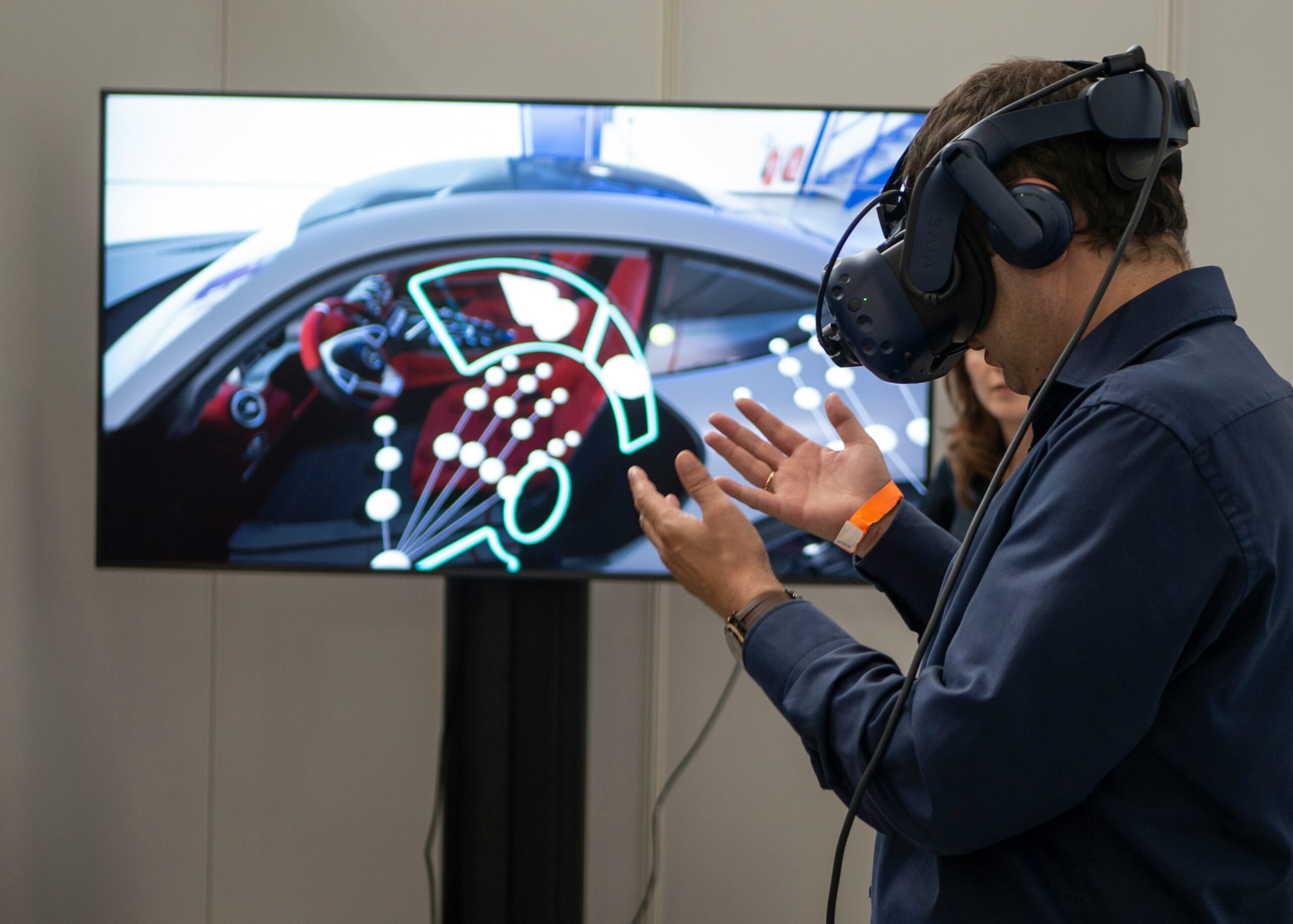
VR offers athletes an unparalleled way to hone their skills with accuracy and precision. Here’s how:
- Repetitive Training – Athletes can complete tasks over and over, gaining the benefits of repetition while losing very little in real-world fatigue. This helps increase muscle memory.
- 360-Degree Game Awareness – VR allows players to look at plays from many different perspectives, increasing their ability to read the field and anticipate movements.
- Reaction Time Boost – VR training boosts athletes’ reaction times by an average of 20%. This is vastly beneficial during high-pressure situations.
- Biomechanics Analysis – Advanced sensors allow for movements to be tracked in real-time, instantly correcting postures, throwing mechanics, and running for a coach’s rigid set of instructions.
With VR, athletes improve their skills like never before, which gives them a measurable advantage over their competitors. Imagine being able to take a millisecond off a sprint start or learning an opponent’s every move without stepping foot on the field. It’s as amazing as watching the latest sports news on MelBet Instagram BD. There’s everything from football to table tennis, and funny sports memes make you even more involved in watching sports.
Simulating Game Scenarios for Better Decision-Making
Being able to practice game situations without the risk of injury is one of the biggest advantages of VR. NBA teams train players to make free throws in VR, as players can imagine different defensive challenges in ultra-realistic settings. Statistics suggest that players training in VR boosted shooting percentages by 12% when compared to normal training methods.
MLB hitters utilize VR to study the motion of opposing pitchers to improve their ability to anticipate pitch types by 18%. The U.S. military trains soldiers using the same type of VR to improve decision-making under pressure, and now, athletes can reap the benefits of similar mental training. With VR, the psychology of sports is not only practiced on the field but perfected in a virtual reality setting.
VR for Injury Rehabilitation and Recovery
An athlete may be sidelined for months due to injury, but with VR, they can heal much faster. Studies have shown that rehabilitation programs that utilize VR technology are 45% more effective in encouraging adherence to therapy compared to traditional methods. Athletes are definitely recovering smarter and faster.
Recovery from ACL injuries normally takes 9 to 12 months, but it can be reduced by 30% with VR. Olympic gymnasts rehearse routines with VR while they are injured to keep important neural connections intact. Top-tier soccer clubs such as Bayern Munich have started using VR in their post-injury rehabilitation practices so that players can regain their confidence before returning to full contact. Training is being transformed by VR, and it is doing wonders for athletes who are healing.
Challenges and Limitations of VR in Sports
While virtual reality attempts to introduce something new, it has obstacles standing in its way, including the following issues:
- Cost Barriers – Hardware for high-quality virtual reality is very expensive, costing anywhere from $10,000 to $100,000. This makes it impossible for amateur athletes to make use of these systems.
- Motion Sickness – Fifteen percent of people who use VR complain about nausea and sickness. This means strategies for adaptation will need to be structured around that statistic.
- Limited Physical Engagement – Even though cognitive training is VR’s strong suit, fully replacing live-action practice is out of the question.
- Technical Learning Curve – Coaches and athletes need to undergo advanced learning just to take advantage of VR’s capabilities in the real world.
Nonetheless, these problems are being worked on, and the constant advancements in VR technology make it easier and more efficient for athletes at all different levels.
The Future of VR in Athlete Performance Training
We are not testing out Virtual Reality anymore. We are enveloped in an entire revolution of new training techniques. Individuals’ ability to train in exaggeratedly immersive environments, hone reflexes, and heal in ways that were previously thought impossible is changing the game. Athletes who accept this tech use it, and their performance is noticeable. The gap between victory and defeat is milliseconds or a couple of inches. Athletes need that extra push, and VR delivers. Sports training, as we know it, is already being redefined and built-in virtual reality. Do you think sports will go through yet another drastic evolution?