Remember, Remember: Bonfire Night, the Old Furniture and Why Skip Hire Beats the Bonfire
Bonfire Night has a smell all of its own: woodsmoke, damp leaves, toffee apples and the faint tang of a sparkler that has just burnt out. For many families it is one of the best nights of the year, wrapped up in hats and gloves with a hot drink in hand.
It also brings an annual temptation. Every autumn, somewhere in a back garden, a pile of wood for the fire starts to grow, and then the broken garden chair joins it, then the old bookcase, then the offcuts from the summer’s DIY. It all looks like fuel. Most of it isn’t.
What belongs on the bonfire, and what belongs in skip hire
Fire services are clear about what a bonfire is for. Lancashire Fire and Rescue Service’s advice is to “only burn untreated wood and not any rubbish or other items”.
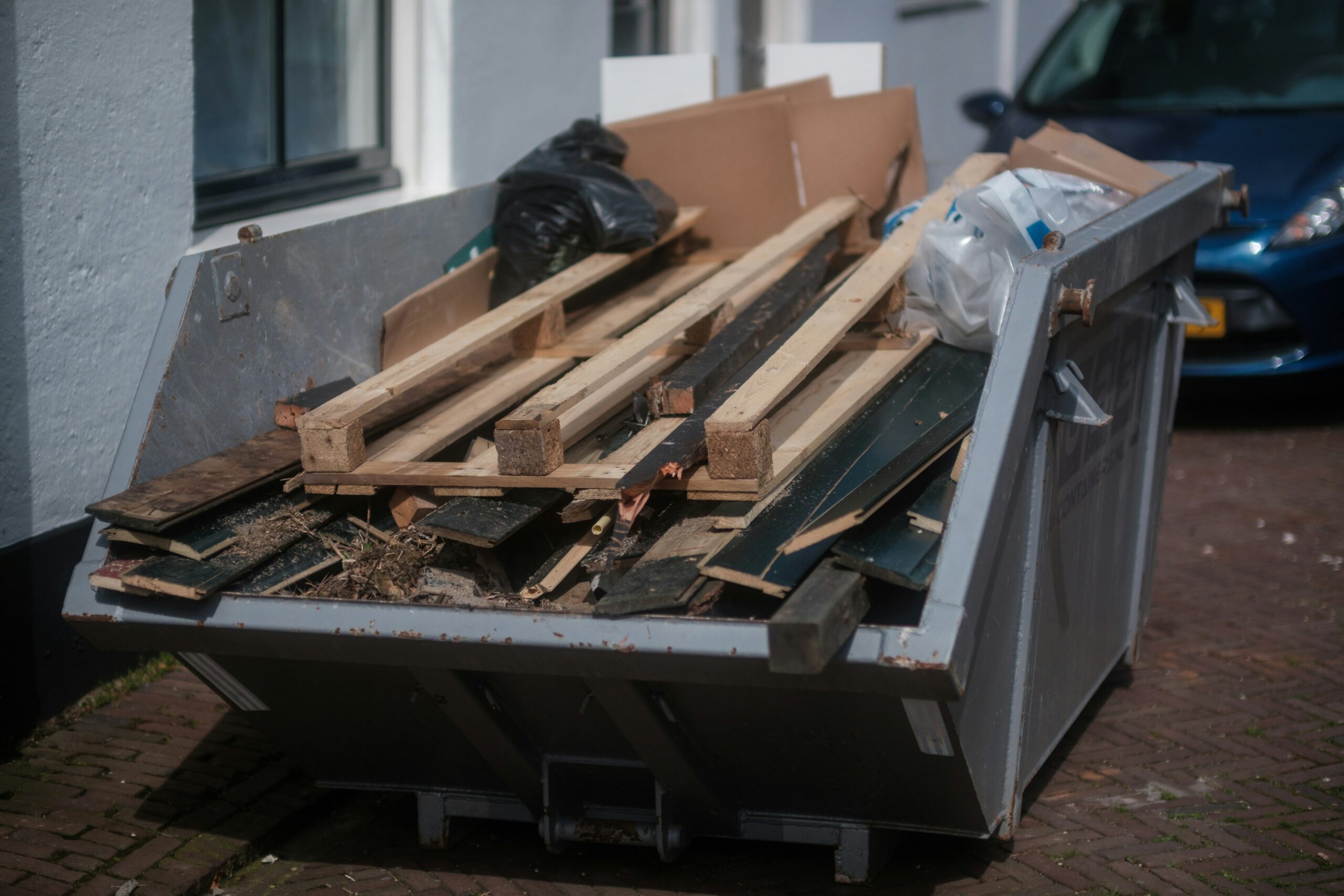
That leaves the obvious question of where the old bookcase should go instead. For most furniture the answer is a skip: according to a guide on what you can put in skips, non-electrical furniture is fine, though gas cylinders and other pressurised containers are not, which happens to be exactly what should never go on a fire either. The government’s guidance on garden bonfires rules out the other option: “You cannot get rid of household waste if it will cause pollution or harm people’s health. This includes burning it.” Most skip hire firms take the old table, the broken chairs and the end-of-season offcuts as a matter of routine, which leaves the bonfire for the wood it was meant to burn.
Why the old furniture shouldn’t go up in smoke
Furniture is rarely just wood. A bookcase is often chipboard held together with glue, a garden chair is often painted or varnished, and the bits of a summer project tend to be a mix of whatever was to hand. None of that is untreated wood, and all of it produces smoke that drifts into neighbours’ gardens and open windows on a night when half the street is outdoors.
The rules have teeth. Councils can investigate complaints about smoke from bonfires and issue an abatement notice where it amounts to a nuisance, and anyone who ignores one can be fined. A fire whose smoke drifts across a road and becomes a danger to traffic can lead to a fine on its own.
A full skip in fireworks season
There is a second reason to think about waste in late October, and it applies even to families who would never dream of burning their own rubbish.
Deliberate fires are part of the weeks around Bonfire Night too. Cleveland Fire Brigade recorded 572 deliberate fires across its area between 13 October and 10 November 2024, and asks people not to let rubbish pile up, because keeping it away from homes, fences and outbuildings stops it becoming fuel for a fire. Some councils go further. In 2025, Midlothian Council offered residents a free collection of flammable items in the week before Bonfire Night to keep waste off unauthorised bonfires, and every slot was booked within days.
For anyone with building work or a clear-out under way, that changes the timing. A full skip sitting on a drive through the first week of November is a ready-made pile of fuel. It makes sense to book the collection before Bonfire Night rather than just after it, to keep the skip level rather than overflowing, and not to stack extra rubbish beside it while waiting for the lorry.
The morning after: ashes, sticks and spent fireworks
Bonfire Night leaves its own waste behind, and most of it needs more care than ordinary rubbish:
- Ashes: West Yorkshire Fire and Rescue Service is unambiguous: “Never put hot ashes in a bin.” The same goes for a skip. A bonfire can look dead by morning and still be hot underneath, so leave the ashes until they are completely cold before moving them anywhere.
- Spent fireworks and sparklers: Council advice is to soak them in water overnight so there is no chance of them setting anything alight, and then putting them in the general rubbish bin, not the recycling. They should never go on the bonfire, even when fully spent, and should never be buried.
- Misfires: Never go back to a firework once it has been lit. Fire service advice is to soak misfired or partly spent fireworks in a container of water, somewhere they cannot be disturbed, and to ask the supplier how to dispose of them.
- Unused fireworks: These must not go in a household bin, and recycling centres will not take them. The simplest answer is to keep them in their original packaging and use them as their instructions intend. Fireworks of any kind, spent or not, have no place in a skip.
- The rest: Rocket sticks, cardboard tubes and the odd stray casing turn up in gardens and on lawns for days afterwards. They are worth gathering up quickly, before small hands or curious dogs find them.
If you still want a bonfire
None of this means giving up the tradition. Lancashire Fire and Rescue Service recommends going to a professional display rather than setting fireworks off at home, and an organised event takes the waste question away entirely.
For a garden bonfire, its advice is simple. Build it close to the night itself, well away from fences and sheds and not under trees or bushes. Never use petrol or other accelerants to light it. Put a barrier around it and keep everyone at least five metres away once it is lit, and keep a bucket of water nearby. Give children one sparkler at a time, with gloves, and put each one in a bucket of water when it has finished. One fire service points out that sparklers can reach temperatures more than fifteen times as hot as boiling water.
A bonfire for the night, a skip for the rest
The best Bonfire Nights are the simple ones: a fire of clean, dry wood, a few fireworks lit at arm’s length, and a garden that looks the same the next morning as it did the day before. The old furniture, the DIY offcuts and the clutter that piles up in autumn belong somewhere else, and the night is better for it.